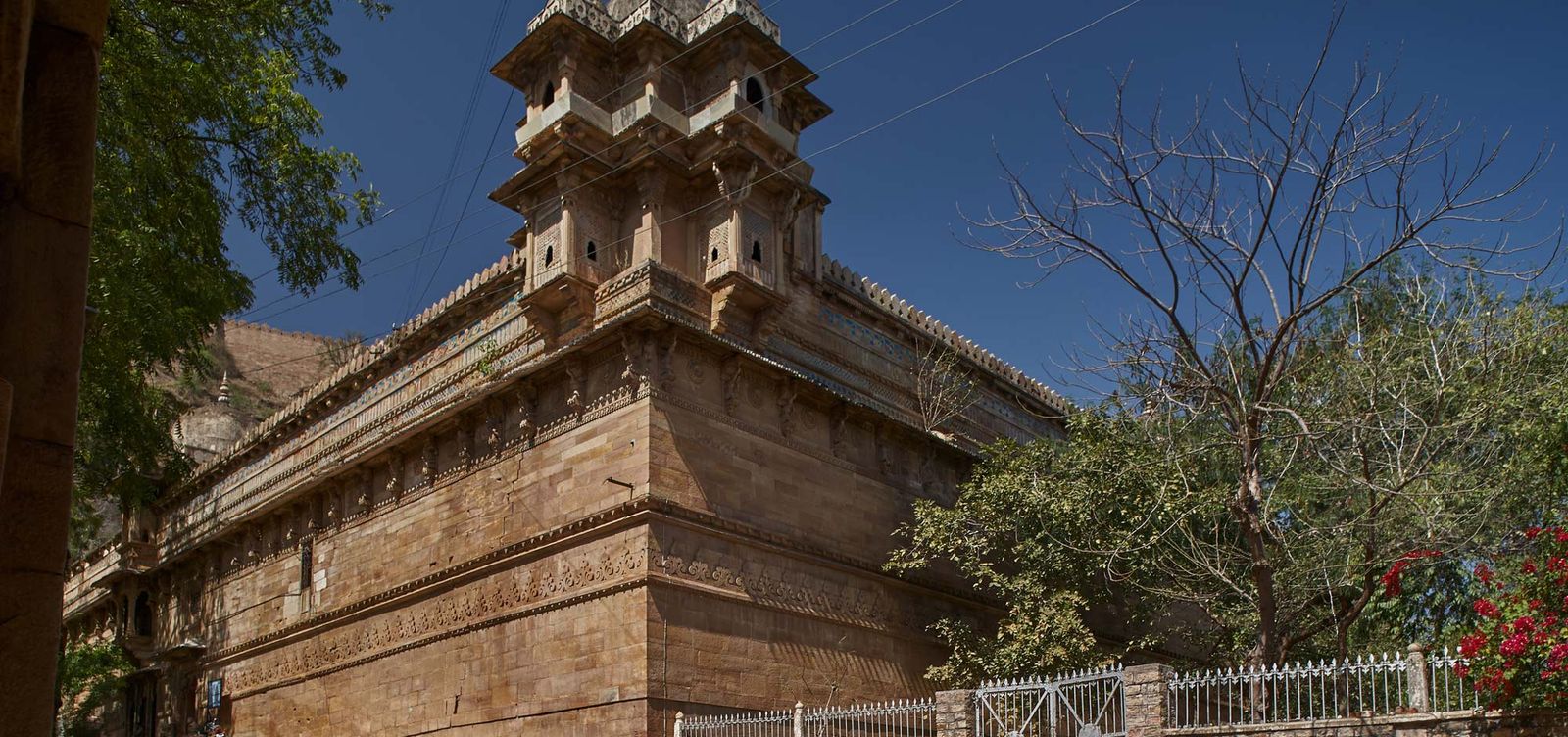
A sandstone colossus rises from the Madhya Pradesh plains like the spine of the earth itself, its walls glowing amber in the late afternoon sun. That's Gwalior — a city that doesn't whisper its history, it roars it. Centuries of royal dynasties have carved their ambitions into every palace facade, temple pillar, and fortress battlement here, creating a landscape so rich with heritage that even a quick afternoon visit leaves you breathless. Yet somehow, this remarkable city remains blissfully free of the tourist crush that descends on Jaipur or Agra. Gwalior is India's best-kept royal secret — and it's waiting for you.
The Fortress That Commands the Sky
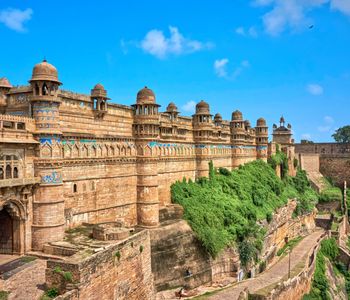
Nothing quite prepares you for Gwalior Fort. Nearly three kilometers of sheer sandstone walls stretch across a flat-topped hill, looming over the city like a stone aircraft carrier anchored in time. Over a thousand years of sieges, celebrations, and silent dawns have passed within these ramparts — and the weight of every one of them hits you the moment you step through the gates.
Inside, the Man Singh Palace stops you mid-stride. Turquoise, emerald green, and saffron yellow tiles cascade across its exterior in elaborate geometric patterns — a 15th-century masterpiece that looks as though someone draped the building in jewels. Wander its corridors, run your fingers along cool stone walls, and feel the Tomar dynasty's world materialize around you.
But the palace is just the beginning. Massive Jain sculptures emerge from the rock face itself, their serene expressions carved with astonishing detail. Ancient temples sit tucked between fortified walls. Hidden tunnels snake beneath your feet, each one carrying whispers of the multiple empires — Mughal, Maratha, Tomara — that fought to claim this hill as their own.
When the Air Fills with Ragas
Gwalior's soul isn't only carved in stone — it hums in the air. This city is one of India's most revered cradles of Hindustani classical music, and the reason has a name: Tansen, the legendary vocalist who became one of the Nine Gems of Emperor Akbar's court.
Every December, the Tansen Music Festival transforms the grounds near his tomb into an open-air concert hall. Some of India's finest classical musicians gather as twilight settles, and the first notes of an evening raga rise into the cool winter air like something alive. Even if you don't know a dhrupad from a khayal, the emotion in those performances is universal — haunting, luminous, unforgettable.
Time your visit for this festival if you can. It's the kind of cultural experience that doesn't just fill your camera roll — it rearranges something inside you.
Palaces, Temples, and Tamarind Trees
Beyond the fort, Gwalior unfolds layer by layer, each landmark revealing a different chapter of its extraordinary past.
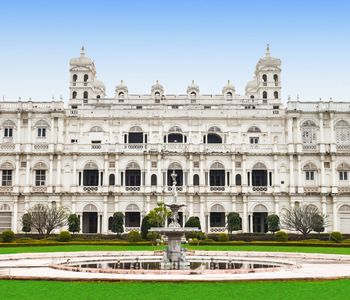
- Jai Vilas Palace — Step inside this 19th-century royal residence and your jaw will drop. European-influenced architecture meets Maharaja-level opulence, crowned by two of the world's largest crystal chandeliers. The on-site museum feels like walking through a Scindia dynasty family album, gilded and grand.
- The Tomb of Tansen — A hush falls over you here. Shaded by ancient tamarind trees, this serene memorial draws music devotees who sometimes sit quietly, as if listening for echoes of the master's voice still lingering in the leaves.
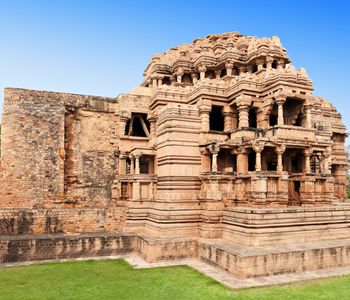
- Saas Bahu Temple — Don't let the colloquial name ("mother-in-law, daughter-in-law") fool you. These 11th-century temples are serious architectural marvels, their ornamental pillars and intricate carvings so detailed you could spend an hour tracing a single panel.
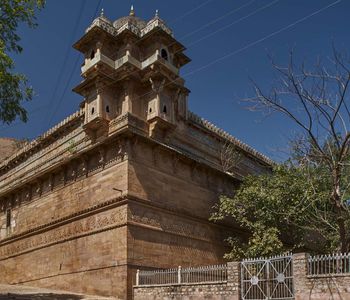
- Gujari Mahal — Built by a king for his beloved Queen Mrignayani, this palace-turned-archaeological-museum houses sculptures and artifacts spanning centuries of the region's history.
Crispy Bedai and Morning Queues
The sizzle of hot oil and the sweet, syrupy fragrance of fresh jalebi hit you before you even spot the vendor. In Gwalior's older neighborhoods, breakfast is a serious affair — and the city's iconic bedai-jalebi combination is practically a religion. Locals line up each morning for these crispy, spiced lentil-stuffed puris served alongside spirals of golden jalebi, still warm and dripping.
Stroll through the bustling markets afterward, where stalls overflow with handcrafted goods, vibrant textiles, and regional souvenirs. Shopkeepers call out cheerful greetings. Ask for directions and you'll likely get a recommendation for their favorite eatery thrown in for free — Gwalior's residents are fiercely proud of their city and genuinely delighted when visitors appreciate it. Hindi dominates daily conversation, though English is understood at most tourist sites and hotels.
Getting Here and Beating the Heat
Fair warning: Gwalior's summers are ferocious. Temperatures rocket past 40°C, and the semi-arid landscape offers little shade outside the monuments. Visit between October and March, when the air turns crisp and cool, the light softens to gold, and exploring on foot becomes a pleasure rather than an endurance test.
Reaching Gwalior is refreshingly simple. Rail and road connections link the city to Delhi, Agra, and Jaipur, making it a natural addition to any northern or central India itinerary. A domestic airport also serves travelers short on time but hungry for history — you can fly in, spend two full days, and still leave feeling like you've uncovered something extraordinary.
A City That Earns Its Crown
Here's what stays with you about Gwalior: the scale of it all. That fortress dominating the sky. Those palace tiles catching the sun. The sound of a raga drifting across a December evening. This city stands shoulder to shoulder with India's most iconic destinations — yet rewards you with something they often can't: the thrill of genuine discovery, unhurried and unfiltered. Come for the history, linger for the music, and leave knowing you've experienced one of India's most magnificent and underrated treasures.