The first thing that hits you isn't the sight of the temples — it's the sound. A low, resonant hum of temple bells rolling across the Shipra River at 4 a.m., mingling with Sanskrit chants and the shuffle of barefoot pilgrims on ancient stone. Ujjain doesn't ease you in. It pulls you under, straight into the beating heart of one of the oldest continuously inhabited cities on the Indian subcontinent.
Nestled along the banks of the sacred Shipra in Madhya Pradesh, this city has been a magnet for seekers, scholars, and wanderers for thousands of years. The devotion here isn't performative — it's woven into every sunrise prayer, every marigold garland sold on a street corner, every grain of sacred ash pressed to a forehead. Come looking for spiritual depth or come as a curious traveler. Either way, Ujjain gets under your skin and stays there.
A River Runs Through Everything
Forget dramatic Himalayan peaks or lush Kerala backwaters. Ujjain's beauty is quieter, more understated — the flat, sun-baked expanse of the Malwa Plateau stretching in every direction, interrupted only by the gentle curve of the Shipra carving its path through the city.
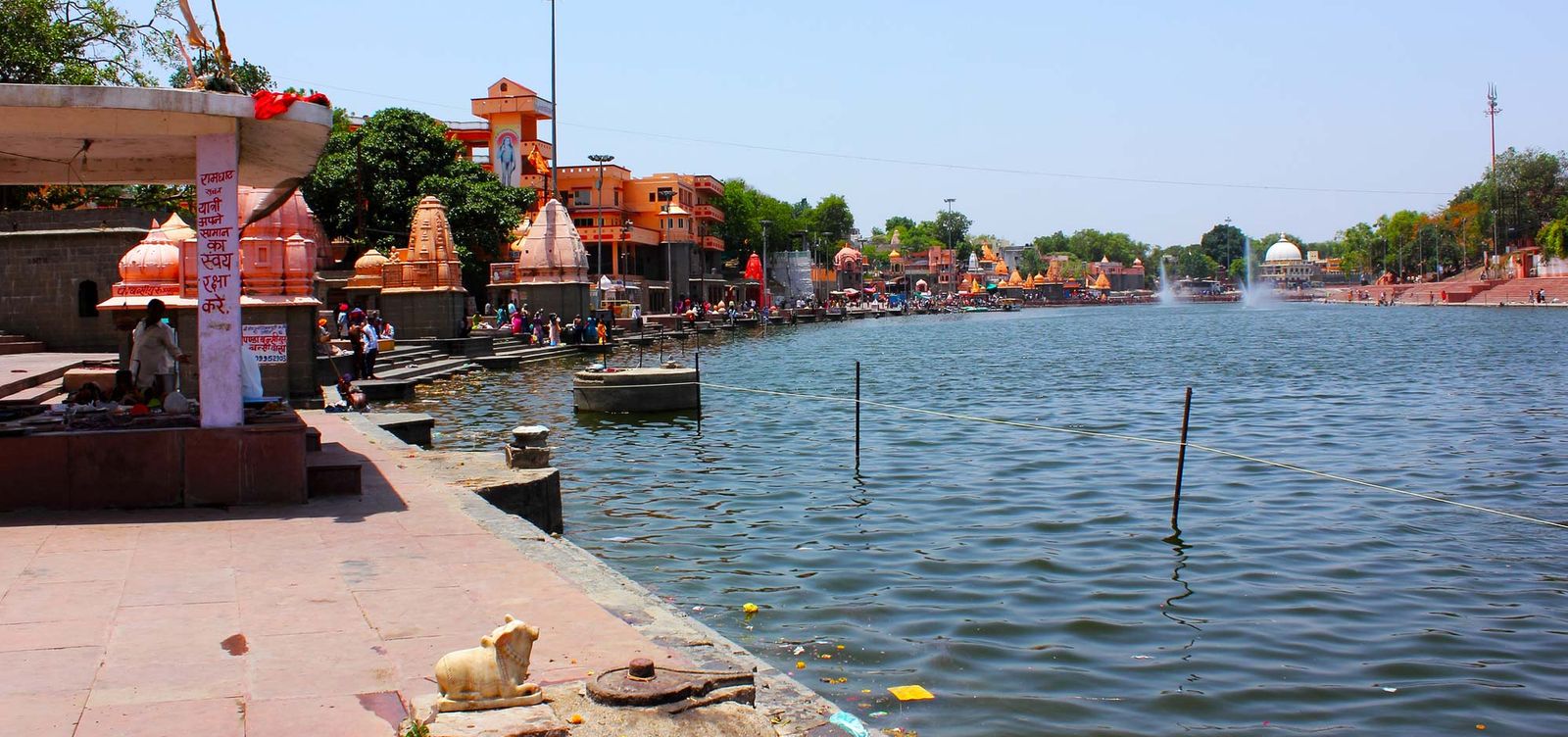
Along the ghats, life unfolds in unhurried layers. Early mornings bring the soft splash of devotees wading into the river, their whispered mantras barely audible over the cooing of pigeons. By evening, the stone steps glow amber under rows of flickering oil lamps, and the scent of camphor drifts thick through the humid air. Beyond the riverbanks, open farmland and scrubby countryside roll outward — a reminder that you're deep in the Madhya Pradesh heartland, far from the tourist circuits.
Mahakaleshwar: Where Dawn Begins in Ash and Fire
No visit to Ujjain makes sense without the Mahakaleshwar Temple. One of the twelve sacred Jyotirlingas dedicated to Lord Shiva, it stands at the very core of the city's identity — a gravitational center that draws devotees from every corner of India and far beyond.
But it's the Bhasma Aarti that will rearrange something inside you. Long before the sun cracks the horizon, priests perform this pre-dawn ritual with sacred ash, their voices rising and falling in hypnotic rhythm while flames dance in the inner sanctum. The air turns heavy with incense, the energy almost electric. Fair warning: entry requires advance registration, and spots vanish fast. Book early, or you'll spend the morning kicking yourself.
Spill out of the temple afterward and let the surrounding lanes swallow you whole. Vendors thrust garlands of jasmine and bright orange marigolds toward you, trays of coconut and sugar offerings glint in the early light, and the warm sweetness of freshly fried mithai floats from tiny stalls wedged between shops.
Temples, Stars, and a Classroom Fit for a God
Ujjain's spiritual and intellectual heritage radiates outward from Mahakaleshwar in every direction. Wander further, and you'll discover layers upon layers of history waiting at every turn:
- Ram Ghat — The primary bathing ghat on the Shipra, where the river's sacred energy feels most concentrated. Arrive at dusk for the evening aarti, when hundreds of tiny floating lamps turn the water into liquid gold.
- Kal Bhairav Temple — Unusual doesn't begin to cover it. Liquor is offered to the deity here, and watching the ritual is as bewildering as it is fascinating.
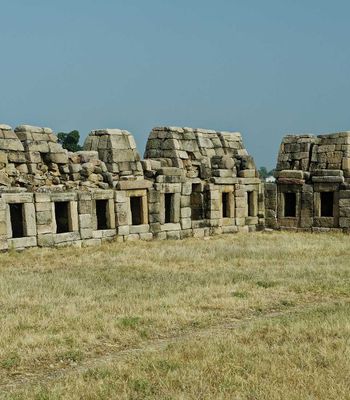
- Vedha Shala (Jantar Mantar) — An ancient astronomical observatory built by Maharaja Jai Singh II, its weathered stone instruments still angled toward the heavens. Stand beside them and feel the weight of centuries of mathematical genius.
- Sandipani Ashram — Believed to be where Lord Krishna himself received his education. The grounds are surprisingly serene, shaded by old trees and wrapped in birdsong.
Walking between these sites feels less like sightseeing and more like peeling back geological strata of Indian civilization — trade, astronomy, mythology, and devotion compressed into a handful of square kilometers. Centuries ago, scholars of mathematics and astrology gathered here, debating the movements of planets long before modern telescopes existed. The observatory stands as quiet, defiant proof of that brilliance.
When the World Descends: Simhastha Kumbh Mela
Every twelve years, Ujjain undergoes a transformation that defies description. Simhastha — the city's own version of the Kumbh Mela — draws millions of devotees, ash-smeared sadhus, and spiritual seekers to the banks of the Shipra in one of the largest religious congregations the planet has ever seen.
The scale is staggering. Streets that normally hold hundreds suddenly throb with tens of thousands. Tent cities bloom overnight along the river. Chanting reverberates through the air from every direction, and the energy along the ghats crackles with something primal and profound. Should your travel dates overlap with Simhastha, brace yourself for a once-in-a-lifetime spectacle — but also for monumental crowds and the absolute necessity of planning every detail well in advance.
Bazaars, Bites, and the Flavors of Malwa
Between temple visits, the local bazaars offer a different kind of revelation. Narrow lanes overflow with shimmering Maheshwari sarees in jewel tones, stacks of brass utensils catching the light, and hand-painted religious souvenirs piled high on wooden carts.
Then there's the food — and oh, the food. Your nose will lead you before your eyes do. Follow the sizzle to a street stall serving poha — flattened rice tossed with mustard seeds, turmeric, and crunchy sev — still steaming in a leaf bowl. A few steps further, golden spirals of jalebi drip with warm sugar syrup, impossibly crisp and impossibly sweet. Don't leave without trying bhutte ka kees, a savory grated corn dish spiced with green chilies and cumin that tastes like the Malwa Plateau itself — earthy, bold, and deeply satisfying.
Locals are warm and accustomed to visitors, though Hindi dominates the conversation. A few basic phrases and a genuine smile will open doors everywhere you go.
When to Go and How to Get There
Timing matters here — more than you might think. October through March offers the sweet spot: mild temperatures, clear skies, and comfortable conditions for walking between temples and ghats. Summers on the Malwa Plateau are punishing, with the mercury regularly soaring past 40°C and the stone streets radiating heat like an oven. Monsoon season (July through September) delivers dramatic relief from the furnace, but heavy downpours can flood low-lying areas and turn unpaved paths into muddy obstacles.
Getting to Ujjain is straightforward. The city connects by rail and road to Indore, Bhopal, and Delhi. Devi Ahilyabai Holkar Airport in Indore sits roughly 55 kilometers away — a quick taxi or bus ride brings you straight to Ujjain's doorstep. Accommodation ranges from simple pilgrim lodges (clean, no-frills, deeply atmospheric) to comfortable mid-range hotels with modern amenities.
A City That Gives Back What You Bring
Ujjain doesn't court you with infinity pools or Instagram-perfect cafés. It asks something different — that you slow down, pay attention, and let centuries of living tradition wash over you like the Shipra itself.
Temple bells at dawn. The sharp sweetness of incense curling through stone corridors. Oil lamps reflected in dark water at dusk. This is a city that rewards the open-hearted, the genuinely curious, and anyone willing to trade comfort for connection. Leave your expectations at the train station. What Ujjain offers instead is something far more rare — an authentic encounter with India's spiritual roots, still alive, still pulsing, still utterly magnetic after all these millennia.