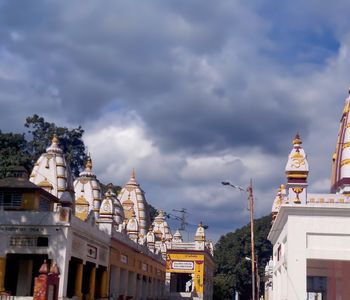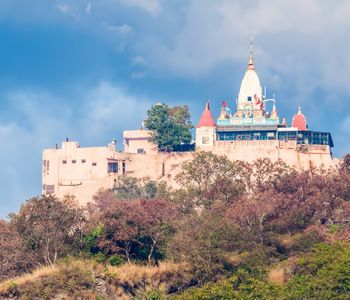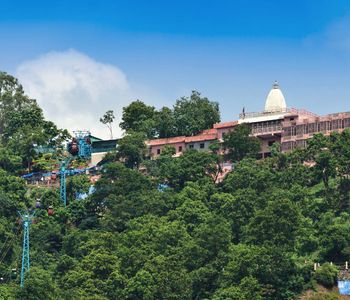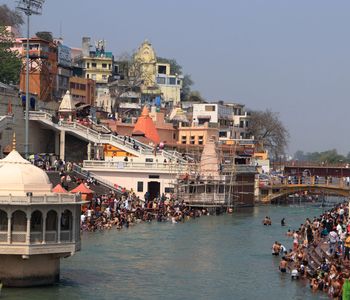
The scent of sandalwood incense drifts through stone corridors worn smooth by centuries of bare feet. Somewhere inside, a bell rings — steady, unhurried — as a priest begins the morning aarti. This is the Daksh Mahadev Temple, and the ground beneath you holds one of Hinduism's most dramatic and haunting legends.
Dedicated to Lord Shiva and named after King Daksha Prajapati — whose infamous fire sacrifice shook the heavens — this ancient shrine sits just 4 kilometers from central Haridwar, on the banks of a quiet canal near Kankhal. That small town, often whispered to be even more sacred than Haridwar itself, wraps around the temple like a living prayer. Devotees, history lovers, and wanderers with an eye for weathered architecture have been finding their way here for centuries, drawn to the very spot where mythology and earth are said to have collided.
A Legend That Set the Heavens on Fire
King Daksha threw a grand yagna — a sacred fire sacrifice — and made one deliberate, devastating omission: he left Lord Shiva off the guest list. His daughter Sati, Shiva's devoted wife, went anyway. What she found was not a welcome but a wall of humiliation. Her father tore into Shiva with open contempt, and Sati, unable to bear the dishonor to her husband, walked into the sacrificial flames.
What followed was divine fury. Shiva, shattered by grief, unleashed his fearsome warrior Virabhadra, who stormed the ceremony and beheaded Daksha in the chaos. Only after the other gods pleaded did Shiva relent — restoring Daksha to life with the head of a goat in place of his own. The Puranas recount this episode across multiple texts, and the Daksh Mahadev Temple marks the exact ground where the yagna's fire is believed to have burned. Few sites in Northern India carry mythological weight this heavy.
Layers of Time Carved in Stone
The mythology stretches back millennia, but the walls you touch today tell a more layered story. The temple has been rebuilt and reshaped across generations, with a major reconstruction under the patronage of Queen Dhankaur in 1810 CE. Her efforts pulled the shrine back into prominence as a pilgrimage cornerstone of the region.
Rulers and devotees across different eras left their fingerprints — a carved lintel here, a restored corridor there. The result is a structure that reads like a timeline, each renovation reflecting its own architectural sensibilities while the spiritual heartbeat never skipped. For anyone who loves tracing how sacred places breathe and evolve over centuries, the Daksh Mahadev Temple is a quietly extraordinary case study.
Where Simplicity Speaks Louder Than Ornamentation
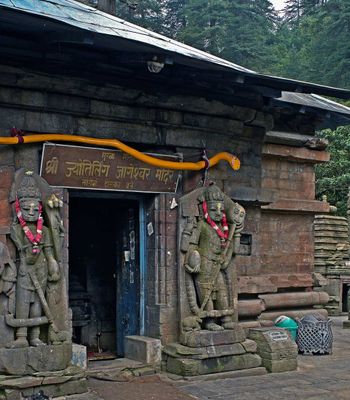
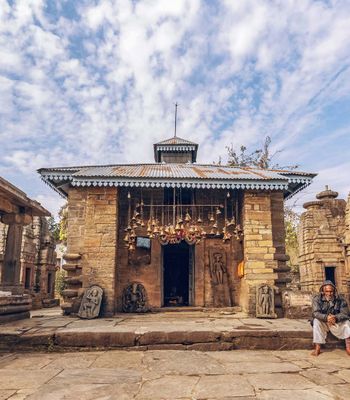
Step through the pillared corridors and let your eyes adjust to the cool, dim interior. A traditional North Indian shikhara rises above the main sanctum, its stone tower tapering toward the sky. Carved detailing adorns the exterior — precise, deliberate, following Hindu temple conventions without excess.
Inside, a Shiva Linga sits at the heart of the sanctum, the focal point of every prayer offered here. Surrounding it, idols and carvings depict the cast of the Daksha legend — gods, warriors, and most strikingly, King Daksha himself, rendered with his goat's head in a visual that stops you mid-step. A sacred well within the premises is believed to mark the precise spot of the fire sacrifice. Devotees linger here, murmuring prayers, palms pressed together.
Don't expect the gilded extravagance of some Indian temples. The architecture is restrained, almost austere — and that's exactly what gives it power. Without visual noise competing for your attention, the silence deepens. The story in the walls becomes the ornamentation.
Faith That Pulses Through Every Festival and Dawn Aarti
This temple is no museum piece — it's a living, breathing place of worship. Many pilgrims fold it into their Haridwar-Kankhal circuit, and some visit as part of their broader Char Dham Yatra preparations. Sacrifice and divine redemption — two themes woven into the temple's origin — sit at the very core of Hindu philosophy, giving this site a resonance that runs deeper than architecture.
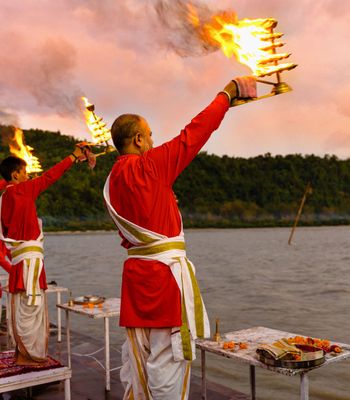
On Shivratri, the temple transforms. Thousands of devotees pour in, offering milk, flowers, and prayers to the Shiva Linga through the night, their chanting rising and falling like a tide. During the annual Kanwar Yatra, when millions of Shiva devotees carry sacred Ganga water across vast distances, many pause their journey here. Even on an ordinary Tuesday morning, the daily aarti fills the air with rhythmic chanting and clouds of incense so thick you can taste it — a full sensory immersion that stays with you long after you leave.
Kankhal: The Quiet Town That Predates Haridwar
Wander beyond the temple gates and you'll find yourself in Kankhal — a town so old that some scholars consider it Haridwar's spiritual elder. Narrow lanes wind past ashrams, smaller temples, and the samadhi sites of revered saints. Modest eateries serve steaming chai and simple meals. Riverside ghats slope down to the water where locals wash clothes and offer evening prayers, unhurried by the world beyond.
Exploring Kankhal alongside the temple deepens the experience immeasurably. You're not just visiting a single shrine — you're stepping into an entire spiritual ecosystem that has hummed quietly for centuries.
Everything You Need to Know Before You Go
Gates open daily from around 6 a.m. to 7 p.m., and there's no entry fee — your wallet gets a break while your spirit gets a workout. Festival days and peak pilgrimage seasons bring surging crowds and longer waits at the sanctum, so plan accordingly. A weekday morning visit rewards you with calm temple grounds, softer light, and the kind of quiet that makes contemplation feel effortless.
Dress modestly — this is an active place of worship, not a sightseeing attraction. Slip off your shoes before entering the temple premises and move respectfully around ongoing prayers and rituals. Photography policies can shift, so a quick word with temple staff before pulling out your camera saves any awkwardness.
Finding Your Way There
From Har Ki Pauri or Haridwar's main bus stand, hop into an auto rickshaw or cycle rickshaw headed for Kankhal — the ride takes roughly 10 to 15 minutes depending on traffic. Shared tempos also run this route frequently and are the go-to choice if you're watching your budget.
Traveling from Delhi or Dehradun? Haridwar Junction sits on the Northern Railway network's main line, with daily trains rolling in from Delhi, Lucknow, and beyond. The temple is about 6 kilometers from the station. Drivers coming by road will find National Highway 334 a smooth, straightforward route into the city.
Stretching the Day Into Something Unforgettable
Most visitors spend one to two hours at the Daksh Mahadev Temple, which leaves plenty of daylight for the surrounding treasures. Ma Anandamayi Ashram and the dazzling Pavan Dham glass temple are both within walking distance — two wildly different experiences that complement the ancient energy of Daksh Mahadev beautifully. Then, as the sun dips, make your way back to Haridwar for the iconic Ganga Aarti at Har Ki Pauri. Flames reflected on dark water, hundreds of voices rising together — it's the perfect closing chapter to a day steeped in devotion.
Hungry? Small restaurants and street vendors near the temple dish out hearty vegetarian thalis and regional snacks — crispy, spiced, and deeply satisfying. Non-vegetarian food and alcohol aren't available anywhere in this area, in keeping with local custom. Tuck a water bottle into your bag, especially between April and June when temperatures can soar past 100°F and the sun shows no mercy.
Walking through those stone corridors, pausing at the ancient sacrificial well, running your fingers along carvings that have watched centuries pass — this isn't a checkmark on a list. It's a conversation with a story that has shaped religious thought for millennia. If Haridwar is on your itinerary, the Daksh Mahadev Temple deserves more than a footnote. Give it the afternoon. Let it leave its mark.