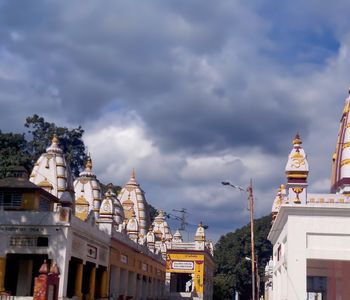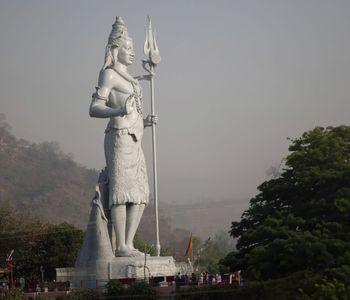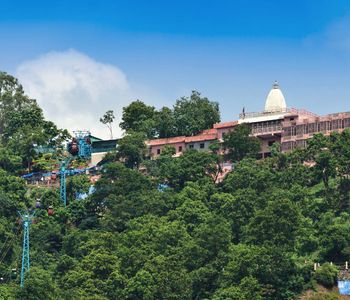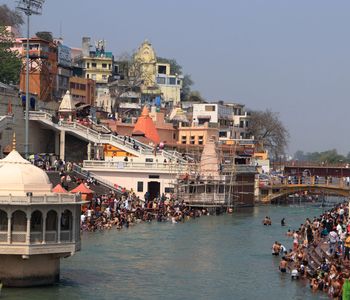
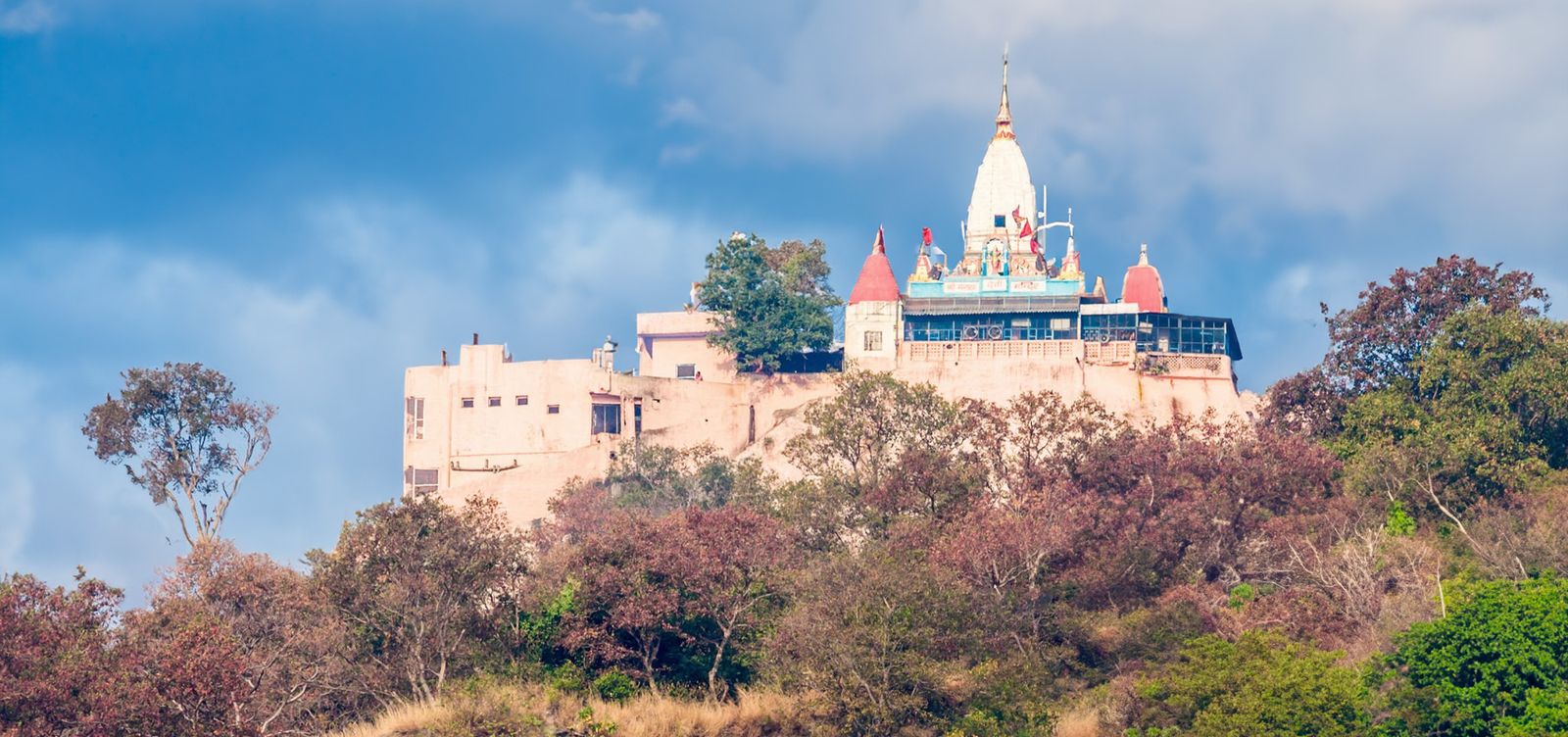
The wind carries the faint clang of brass bells and the sweet perfume of marigold garlands long before you catch your first glimpse of the temple. Perched high on Neel Parvat hill, overlooking the eastern bank of the Ganges, the Chandi Devi Temple commands one of the most sacred vantage points in all of Haridwar. Dedicated to Goddess Chandi — a fierce, battle-ready form of Goddess Durga — this ancient shrine pulls in thousands of devotees and wonder-struck travelers each year.
But its power isn't just spiritual. As one of the Panch Tirth, the five sacred pilgrimages within Haridwar, the temple sits at the crossroads of mythology, history, and jaw-dropping natural beauty. Legend holds that the Goddess herself vanquished demon armies on this very summit, and a temple rose to mark her divine victory. Whether you're drawn by faith or simply by the promise of panoramic Himalayan foothills views, the climb to Chandi Devi rewards you in ways you won't expect.
A Battle on the Summit: The Mythological Roots
Long before stone was laid here, a cosmic war raged. Hindu legend speaks of Goddess Chandi locked in ferocious combat with the demon chiefs Shumbha and Nishumbha. When she struck them down on the peak of Neel Parvat, the ground itself became hallowed — forever charged with her victorious energy.
Devotees believe the Goddess chose this hilltop as her eternal resting place, and that belief still pulses through every prayer offered here today. The temple also holds the rare distinction of being a Siddha Pitha — a place where, according to tradition, prayers are answered with certainty. For anyone fascinated by India's mythological tapestry, the stories stitched into this hillside shrine feel almost tangible as you stand among the incense smoke and murmured mantras.
Centuries of Devotion Carved in Stone
Here's what surprises most visitors: while the mythology stretches back millennia, the temple you see today was built in 1929. Yet the main idol of Goddess Chandi is far older — installed in the 8th century by the King of Kashmir, reportedly under the guidance of the great philosopher-saint Adi Shankaracharya. That ancient idol still presides over the sanctum, a direct, unbroken thread connecting you to over a thousand years of worship.
A game-changer arrived in 2003 when a modern ropeway system was installed, opening the temple to travelers of all fitness levels. Before that, the only path to the Goddess was a grueling uphill trek — a pilgrimage in the truest sense. Today, you get to choose your own adventure: ride the cable car or earn the summit step by step.
Simple Walls, Extraordinary Energy
Don't come expecting the towering gopurams of South India. Chandi Devi Temple is architecturally modest, and that's precisely what makes it so disarming. Its power lives in atmosphere, not ornamentation.
Inside the main sanctum, the ancient idol of Goddess Chandi sits draped in vivid red fabric and heaped with fresh flowers — jasmine, roses, marigolds — their fragrance mingling with camphor and sandalwood incense. Step into the surrounding courtyards and you'll find colorful prayer flags snapping in the mountain breeze, brass bells swaying and chiming in a rhythm that feels almost conversational.
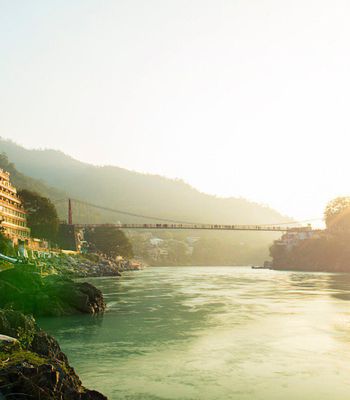
Then turn around. From the temple courtyard, the entire city of Haridwar unfolds below you — the Ganges ribboning silver through the valley, the Shivalik hills rolling into blue-green haze. On clear days, the sprawling city looks almost miniature against the vast Indo-Gangetic plain. It's the kind of view that makes you stop mid-sentence and just breathe.
Two Ways Up: Choose Your Adventure
Soar Over the Ganges by Cable Car
Most visitors opt for the Chandi Devi Udankhatola — the ropeway operated by the Uttarakhand government. You'll board near the Gauri Shankar Temple at the base of Neel Parvat, and within five minutes, you'll glide 2.5 kilometers over treetops and rooftops as the Ganges unspools beneath your feet. Tickets typically run between 118 and 258 rupees per person for one-way or round-trip fares, though it's wise to double-check current pricing before you go, as rates can shift seasonally.
Earn the Summit on Foot
There's something deeply satisfying about arriving at a temple with burning calves and a pounding heart. The traditional 3-kilometer trek from the base takes roughly 45 minutes to an hour, winding uphill through patches of shade and sunlight. Small chai stalls dot the route — grab a steaming cup of milky, cardamom-laced tea and catch your breath while birdsong fills the canopy above.
Fair warning: the trail gets steep and uneven in places, so sturdy shoes are non-negotiable. During monsoon season (July through September), wet rocks turn treacherous — tread carefully. In warmer months, slather on sunscreen, wear a hat, and keep a full water bottle within easy reach.
When to Go and What to Know
Gates swing open daily from 6 a.m. to 8 p.m., while the ropeway generally runs from 8 a.m. to 7 p.m. Entry to the temple is free — only the cable car requires a ticket. If solitude matters to you, arrive at dawn on a weekday; the hilltop feels almost meditative before the crowds build. Weekends and festival days bring long ropeway queues and shoulder-to-shoulder energy in the courtyards.
October through March is the sweet spot — crisp air, comfortable trekking temperatures, and crystalline skies perfect for photography. Summer (April to June) can be punishing, especially at lower elevations where the heat radiates off concrete and asphalt. But if you happen to visit during Navratri — the nine-night festival celebrating Goddess Durga — prepare for something unforgettable: the hillside erupts in color, the air thrums with special prayers and drumbeats, and the festive electricity is almost physical.
Don't Stop at One Temple: Nearby Treasures Worth Your Time
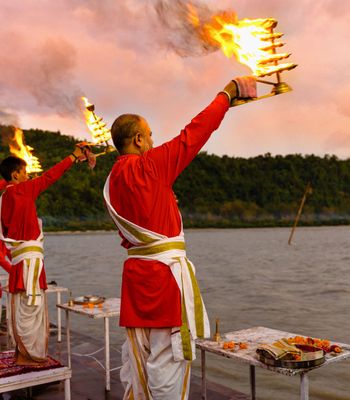
Since Chandi Devi Temple belongs to the Panch Tirth circuit, pairing it with Haridwar's other sacred landmarks turns a single visit into a full-day pilgrimage. Begin at Har Ki Pauri ghat as evening falls — the Ganga Aarti ceremony there is hypnotic, with flickering oil lamps floating on the river's surface, deep chanting reverberating off ancient stone, and the scent of ghee and camphor thick in the air.
Next, ride another ropeway to Mansa Devi Temple, the hilltop shrine often visited in tandem with Chandi Devi. Many pilgrims complete both in a single day, and you can too without feeling rushed.
Before or after your ascent, lose yourself in the bustling market lanes surrounding the base of Neel Parvat. Vendors hawk sacred red threads, vermillion powder, and tiny brass idols alongside sizzling street food — crispy aloo puri bursting with spiced potato, and spirals of syrup-soaked jalebi still dripping gold. Let the chaos of color, commerce, and cardamom-scented steam pull you in. It's the perfect cultural counterpoint to the quietude above.
Honor the Space: Temple Etiquette That Matters
This is an active, deeply revered place of worship — a few simple gestures of respect go a long way. Slip off your shoes before stepping into the main shrine area. Wear modest clothing that covers your shoulders and knees, regardless of the heat. Photography is often restricted inside the sanctum, so follow posted signs and listen to temple staff. Alcohol and non-vegetarian food are strictly prohibited on the premises.
Standing on the summit of Neel Parvat, with the Ganges catching sunlight far below and temple bells ringing at your back, you begin to understand why pilgrims have climbed this hill for over a thousand years. Devotion, history, and raw natural beauty converge here in a way that's hard to find anywhere else. Plan ahead, respect the traditions, and let the Goddess — and the view — leave their mark on you.