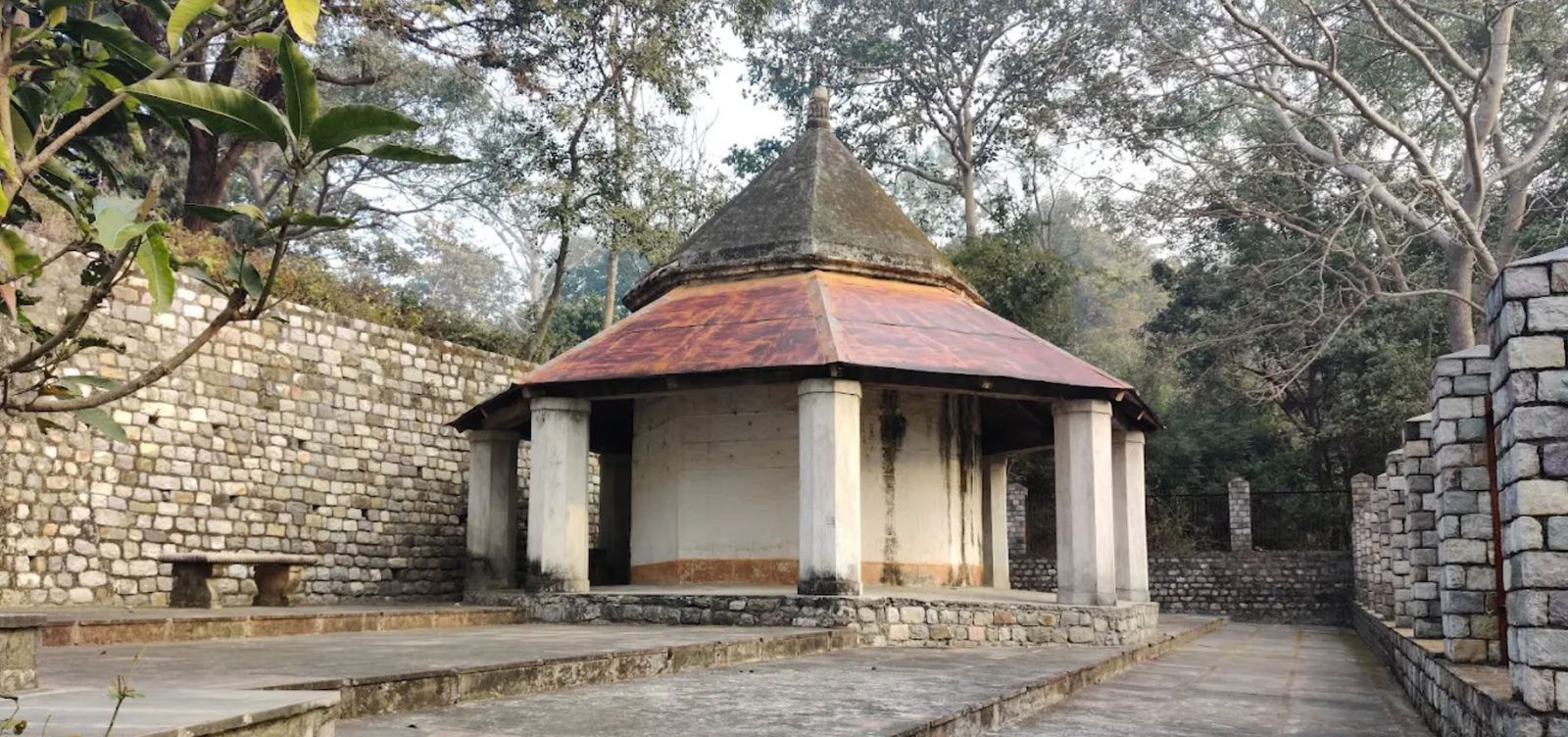
The road to Sitabani Temple doesn't really qualify as a road. It's a stretch of broken track that winds through the reserve forest on the western edge of Jim Corbett National Park, past sal trees that lean into the path and streambeds that may or may not be dry depending on the season. You'll likely pass a peacock or two. You might pass nothing at all for twenty minutes. And then, without warning, you arrive at a clearing where the forest opens up and a small stone temple sits beside a stream, looking as though it has been there longer than anything else in sight.
It has. The temple is dedicated to Sita, wife of Rama, and local belief holds that this forest is where she lived during her exile — and where the earth eventually opened to receive her back. That's the story you'll hear from the priest, from the chai vendor, from the man selling marigolds at the entrance. Whether you believe it or not is beside the point. The place feels old in a way that's hard to fake.
Where the Forest Keeps Its Own Counsel
Sitabani lies inside the Sitabani Buffer Zone, which sits just outside Corbett's core tiger reserve. This distinction matters. The buffer zone doesn't require the permits and jeep safaris that govern the main park. You can drive yourself in. You can stop where you want. You can walk to the temple instead of viewing it from behind a rolled-up window.
That freedom changes the experience entirely. In Corbett proper, you're a visitor on a schedule. Here, you're just someone who happened to find the place.
The forest itself is dense — sal, haldu, sissoo — with the Kosi River running somewhere to the east. Birds outnumber everything. Drongos, hornbills, kingfishers, parakeets. If you keep your voice down, you'll see them. If you don't, you'll hear them complain.
A Shrine That Doesn't Need to Sell Itself
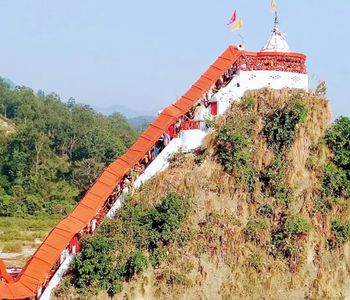
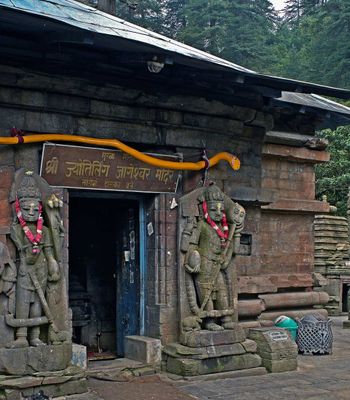
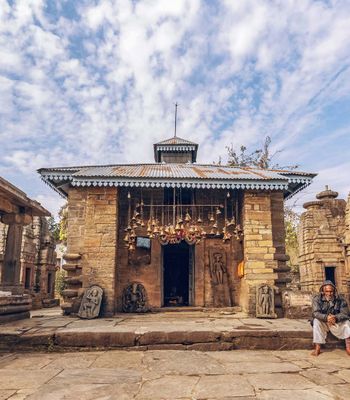
The structure itself is modest. A small shrine of weathered stone, a courtyard worn smooth by bare feet, a few bells strung above the entrance that visitors ring as they pass through. There's no marble. No gold leaf. No queue management system or shoe-check counter staffed by a man with a ticket book. You leave your sandals on a flat rock and walk in.
Inside, an idol of Sita sits surrounded by oil lamps and flower offerings. The priest, if he's there, will mark your forehead with vermilion and hand you a piece of sugar candy. He won't ask for money, though a small donation in the box near the door is the right gesture.
What makes the temple memorable isn't the architecture. It's the silence around it — broken only by the stream, the wind in the sal canopy, and the occasional distant alarm call of a langur signaling something it doesn't like.
The Stream, the Stones, and the Story
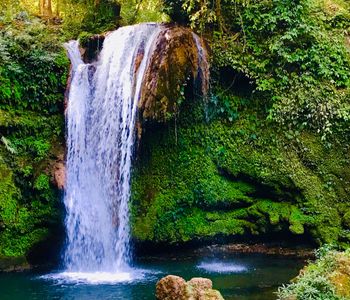
Just behind the temple, a small stream curves through a bed of smooth grey rocks. Locals say this is where Sita drew water during her years in the forest. Pilgrims sit here and rest their feet. Children, when there are any, throw pebbles. The water is cold, even in summer, and clear enough that you can see the small fish that dart between the stones.
A short walk upstream brings you to a meditation cave — or what's claimed to be one — set into a low rock face. Whether or not it's the actual site of any ancient retreat, sitting inside it for ten minutes is its own argument for the place.
There's also a Hanuman shrine nearby, and a few smaller idols tucked among the trees that look almost as if the forest planted them. None of it feels staged.
What You're Likely to See on the Way
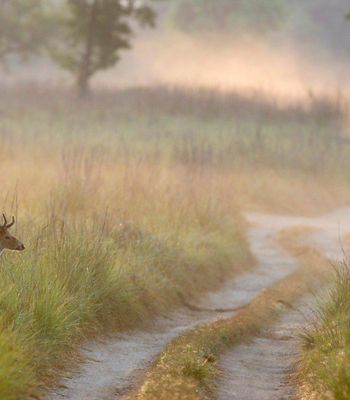
The drive in is half the experience. The Sitabani Forest is home to leopards, sambhar deer, wild boar, jackals, and an extraordinary variety of birds. Tigers pass through too, though sightings are rare and never guaranteed — which is honest, because nothing about a tiger should ever be guaranteed.
You're more likely to see fresh pugmarks pressed into the dust beside your tyre tracks than the animal that made them. That's part of the appeal. The forest reminds you that you're not the main character here.
Local guides, available for hire at the entry gate, are worth the small fee. They know which trees the hornbills favour and which bends in the track tend to produce a sloth bear at dusk. They also know when to stop talking, which is a rarer skill than it sounds.
Getting There Without Getting Lost
Sitabani Temple sits roughly 12 kilometres from Ramnagar, the gateway town to Corbett. From there, you drive toward the Sitabani Gate, pay a modest entry fee for the buffer zone, and continue along the forest track. A sturdy vehicle helps — the road is rough in places and impassable after heavy rain. Most visitors hire a jeep with a driver from Ramnagar, which removes the navigation problem entirely.
The temple is open from sunrise to sunset. There's no electricity at the site, so plan accordingly. Mornings are best for birdlife and light; late afternoons for atmosphere, when the sal trees throw long shadows across the courtyard.
The buffer zone is typically open year-round, unlike parts of the core Corbett reserve that close during the monsoon. Still, the months between November and April offer the most reliable weather and the best chance of seeing wildlife on the way in.
A Few Practical Things Worth Knowing
Carry water. Carry a hat. Carry small notes for the donation box and for the chai vendor who may or may not be there depending on the day. There are no restaurants, no shops, no functioning mobile signal for stretches of the route. Treat it as a small expedition rather than a sightseeing stop.
Dress modestly. Remove your shoes before entering the temple. Don't play music from your phone — the forest is doing its own thing, and it's doing it better than you are.
Photography is generally allowed in the outer areas, though it's polite to ask before pointing a camera at the inner sanctum or at the priest.
Why It Stays With You
Sitabani isn't a place that tries to impress you. It doesn't have the scale of the great pilgrimage temples of northern India, or the architectural drama of the Himalayan shrines further up the road. What it has is older and quieter — a sense that you've stepped slightly outside the modern world and found something that's been left mostly alone.
For travellers passing through Corbett with cameras pointed only at tigers, the temple offers a different reason to come into the forest. You leave with the sound of the stream in your head and the faint smell of incense on your sleeve, and the strange certainty that you'll think about the place again, weeks later, for no clear reason at all. Go early. Go slowly. Let the forest set the pace.