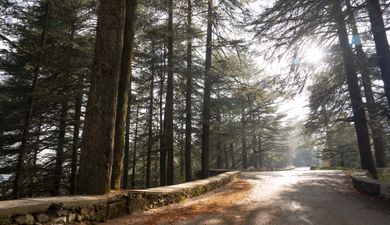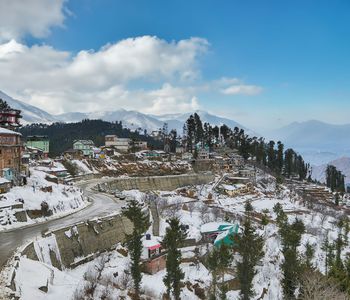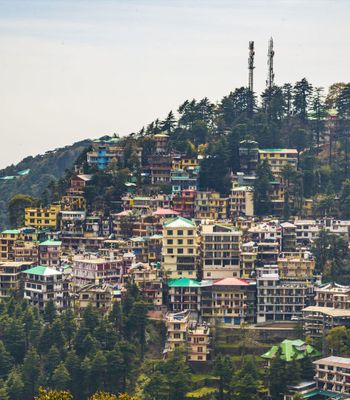
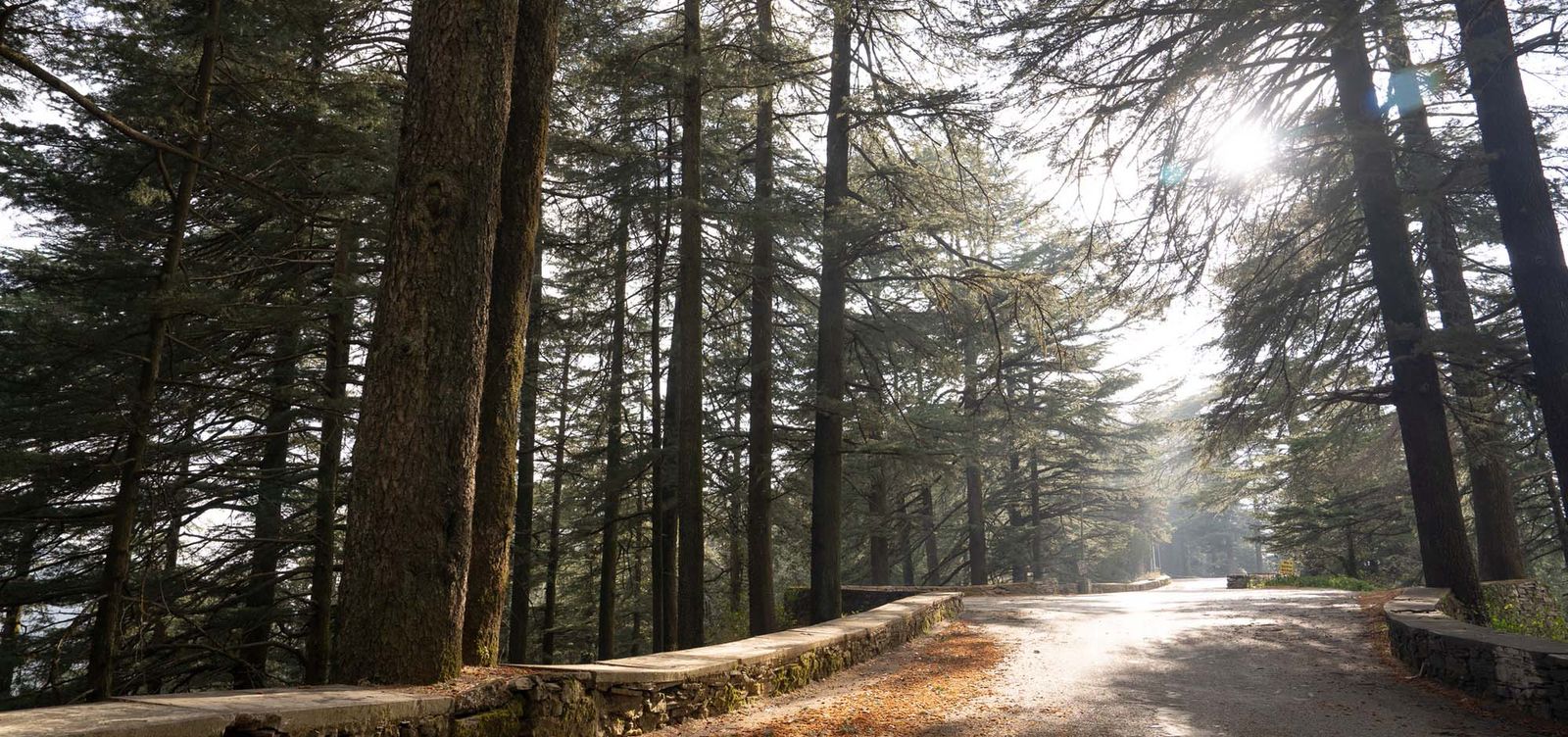
At 7,000 feet, the air hits differently. Cooler, thinner, saturated with the resinous sweetness of deodar pines — each breath feels like a quiet reset. This is Chail, a hill station tucked into the forested folds of Himachal Pradesh, born from a maharaja's wounded pride and still humming with that defiant, regal energy more than a century later.
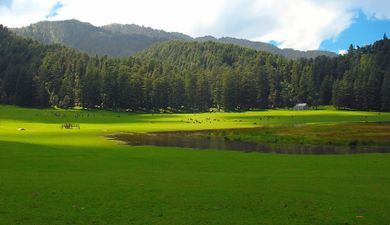
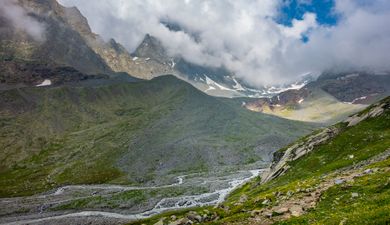
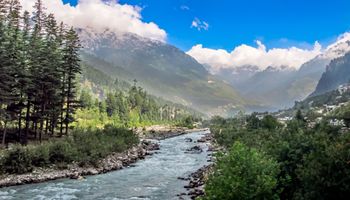
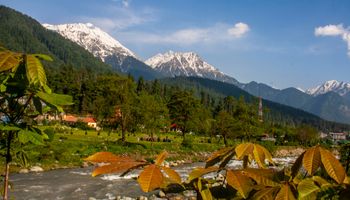
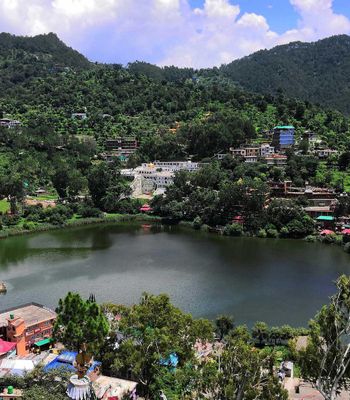
Roughly 45 kilometers from Shimla yet a world away from its tourist crowds, Chail sprawls across three hills — Rajgarh, Sadh Tiba, and Pandewa — each crowned with its own landmark, its own reason to linger. Here, you won't jostle for photo spots or queue behind tour buses. Instead, you'll wander forest trails where the only competition is between birdsong and the rustle of oak leaves, pause on hillsides where the Himalayan panorama unfolds in layers of blue and white, and feel the kind of stillness that modern life rarely offers.
A Palace Built on Defiance
The year was 1891. Maharaja Bhupinder Singh of Patiala — brash, young, royal to the bone — found himself banished from Shimla by British Viceroy Lord Kitchener after a bitter personal dispute. Most men would have retreated quietly. The Maharaja decided to build a rival.
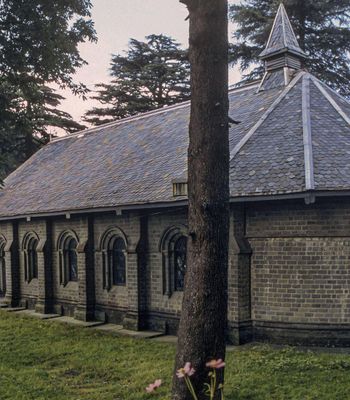
He chose these remote, densely forested hills and poured his ambition into them: a palace, manicured gardens, a cricket ground perched impossibly on a flattened hilltop. His vision fused British hill station elegance with the opulence of Punjabi royalty — a summer capital that would make Shimla look over its shoulder. After Indian independence, the Himachal Pradesh government acquired much of the estate. Today, the Chail Palace operates as a heritage hotel managed by the state tourism corporation, its corridors still whispering with that original spark of royal rebellion.
Inside the Crown Jewel on Rajgarh Hill
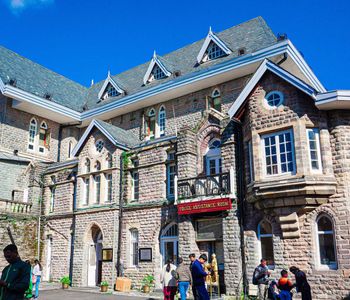
Stone walls warmed by afternoon sun. Wide wooden verandas creaking softly underfoot. Vintage photographs in gilded frames catching your eye as you move through corridors that smell faintly of aged teak and history — the Chail Palace doesn't shout its grandeur. It lets you discover it, room by room.
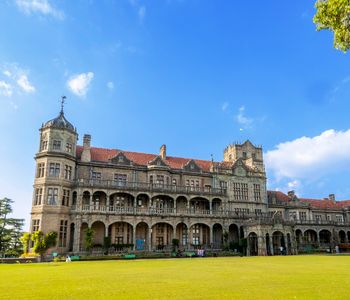
Sitting atop Rajgarh Hill, the palace blends colonial-era architecture with traditional Indian craftsmanship in a way that feels neither stuffy nor staged. Even if you're not a guest at the hotel, the grounds are open to visitors, and they're worth every minute. Expansive lawns stretch outward beneath a canopy of towering deodar and pine, and from several vantage points, the Shivalik range and the Sutlej River valley reveal themselves in breathtaking, hazy detail far below.
Grab a cup of Himachali tea from the hotel, find a bench on the lawn, and let the view do its work. No Instagram filter can match what your eyes will take in here.
Cricket at the Roof of the World
A flat cricket pitch shouldn't exist at 7,500 feet above sea level. And yet, on Sadh Tiba Hill, there it is — the highest cricket ground on the planet, carved into existence in 1893 on the Maharaja's orders. Workers literally flattened an entire hilltop to create a level playing surface, a feat of engineering that feels audacious even by today's standards.
Stand at the crease and look around: dense forest crowds the boundaries, mountain peaks frame the sky, and the sheer improbability of the place settles over you. The ground still hosts local matches, polo events, and community gatherings. A military school adjacent to the field uses the facility now, adding a crisp sense of discipline to the setting. Even if you couldn't care less about cricket, the short uphill walk pays off handsomely — the 360-degree views from this elevation are among Chail's finest.
Where Prayers Meet the Peaks
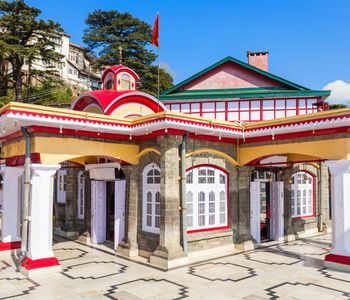
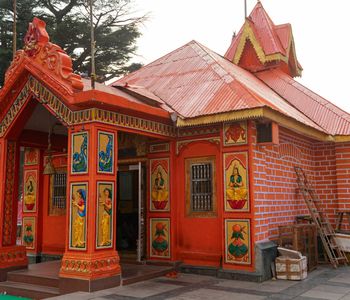
Long before the Maharaja arrived with his blueprints and ambitions, the Kali Ka Tibba Temple already stood on Pandewa Hill — Chail's spiritual anchor, believed to be centuries old and dedicated to the Goddess Kali.
Getting there requires a moderate uphill trek through thick forest, where shafts of light pierce the canopy and the trail narrows to something that feels less like a walk and more like a pilgrimage. At the summit, the reward is staggering: sweeping views of the Choor Chandni peak and distant snow-capped Himalayas, stretching so far they blur into sky. During Navratri, the temple pulses with devotional songs and rituals, drawing Hindu worshippers from across the region. Photographers, take note — this is the highest point among Chail's three hills, and the golden morning light spreading across the mountains from here is the kind of shot you frame and keep forever.
Into the Wild Green Heart
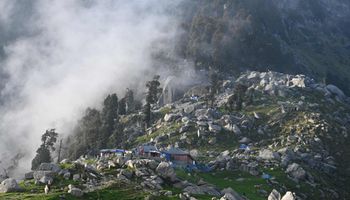
Strip away the palaces and history, and Chail would still be extraordinary — because these forests are alive in ways that catch you off guard. The Chail Wildlife Sanctuary, spanning roughly 110 square kilometers, wraps around the hill station like a protective embrace, its hillsides blanketed in oak, deodar, pine, and rhododendron that shift color dramatically with the seasons.
Feathers, Fur, and Forest Trails
Walk quietly and you'll start to notice them — barking deer freezing mid-step between the trees, langur monkeys swinging through the canopy with casual grace, the sudden flash of a kalij pheasant disappearing into undergrowth. The elusive red jungle fowl, Himachal Pradesh's state bird, makes its home here, and over 150 avian species call these woods home, including Himalayan woodpeckers and various species of thrush.
Bring binoculars. Move slowly. Let the forest come to you rather than chasing it — that's when Chail reveals its wildest secrets.
Trails That Earn Their Views
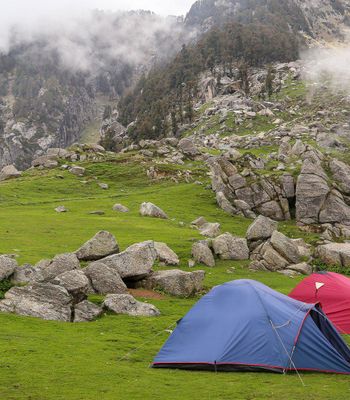
Several well-marked routes thread through the sanctuary and between the three main hills, alternating between shaded forest paths and sunlit meadows that open up without warning. The gentle walk from the palace to the cricket ground suits families and casual hikers perfectly. Craving something more remote? The trail from Chail to Gaura plunges deeper into the wilderness, where tourist footprints thin out and the forest thickens around you like a green, breathing cathedral.
When Should You Go?
March through June delivers the sweet spot — pleasant temperatures between 15 and 30 degrees Celsius, dry trails, and the kind of clear skies that make every hilltop view a postcard. April, May, and October hit the ideal balance of comfortable weather and manageable crowds.
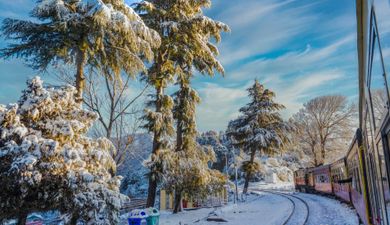
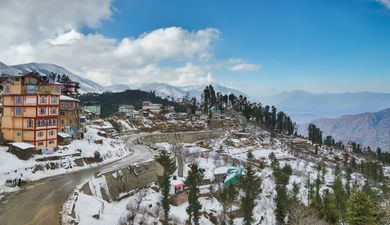
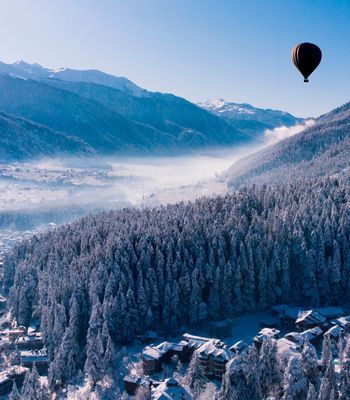
Monsoon months (July through September) drench the landscape into an almost impossibly vivid green, though trails can turn slippery and muddy — beautiful to witness, tricky to navigate. Winter, from December through February, transforms Chail entirely: snowfall drapes the forests and palace grounds in white, temperatures plunge below freezing, and the silence deepens to something almost tangible. Pack serious warm layers if you're chasing that winter magic.
Navigating the Mountain Roads
No railway station, no airport — Chail makes you earn your arrival by road, and honestly, the journey is half the reward. From Shimla, the 45-kilometer drive takes roughly two hours along winding mountain roads that snake through Kufri, each hairpin bend revealing another valley view that makes you grab for your camera.
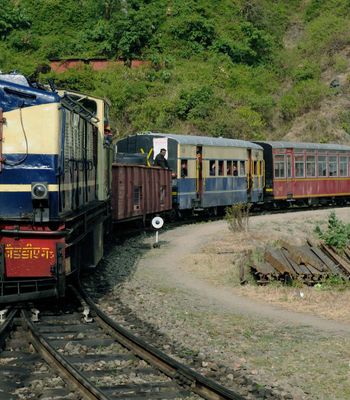
Travelers coming from Chandigarh can reach Chail in approximately four hours via Kandaghat, which connects to the nearest narrow-gauge railway station. Daily buses run by the Himachal Road Transport Corporation cover the Shimla-Chail route, but hiring a private taxi gives you the freedom to stop whenever the scenery demands it — and it will, repeatedly. Once you arrive, Chail's compact layout means most attractions are a short walk or brief drive away.
Sleep Like Royalty, Eat Like a Local
Spending the night at the Chail Palace hotel adds a layer of romance that's hard to replicate — waking up in a heritage property surrounded by deodar forest, with mountain mist drifting past your window, feels almost cinematic. Beyond the palace, modest guesthouses and state-managed forest rest houses offer simpler stays. Book ahead if you're visiting between April and June — rooms fill fast during peak season. Budget travelers will find clean, no-frills options near the main market.
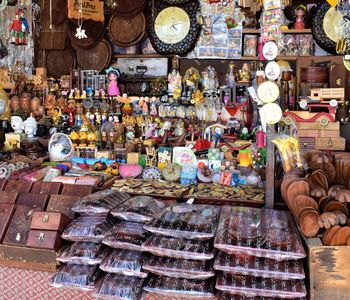
Dining in Chail is honest rather than elaborate, and all the better for it. The palace hotel serves North Indian and Himachali cuisine in surroundings that match the food's warmth, while small restaurants and dhabas near the market dish out hearty meals at prices that won't dent your wallet. Seek out siddu — steamed bread stuffed with poppy seeds that's pillowy and fragrant — or madra, a rich yogurt-based chickpea preparation that coats your tongue with creamy, spiced comfort. And on cool evenings, nothing beats wrapping your hands around a cup of hot chai from a roadside stall, a plate of steaming maggi balanced on your knee, the mountain air sharp against your cheeks.
Royal history layered over ancient spirituality, a world-record cricket ground ringed by forest, trails that lead from palace lawns to untamed wilderness — Chail packs a remarkably rich experience into a quietly compact hill station. For every traveler who's felt overwhelmed by Shimla's bustle, this forested retreat waits just an hour's drive away, unhurried and full of surprises. Let it reveal its stories to you one trail, one hilltop, one misty morning at a time.