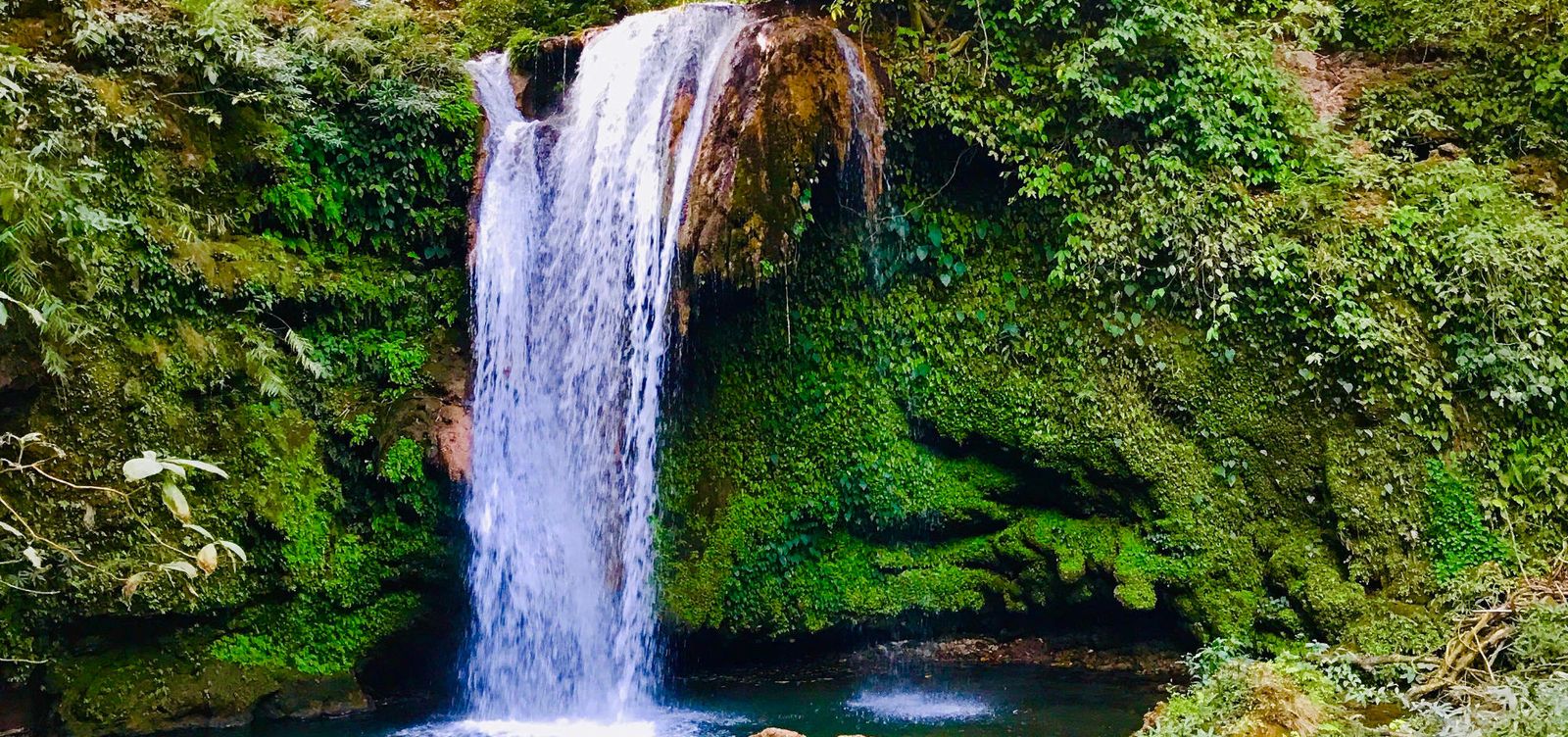
Corbett Falls doesn't announce itself. You hear it first — a steady, layered rush filtering through the sal forest about a kilometre off the Ramnagar–Kaladhungi road — and then you walk the last stretch on foot, past vendors selling chai in glass tumblers, until the trees part and a 20-metre ribbon of water drops into a shallow pool framed by mossy rock.
This isn't a thundering, postcard-famous cascade. It's modest, intimate, and entirely the better for it. Most travellers blow past it on the way to a tiger safari, which means if you time it right, the place is nearly yours. In the foothills of the Kumaon range, where the Himalayas begin to flatten into the Terai plains, Corbett Falls is the quiet pause between bigger adventures.
A Small Waterfall, A Big Forest Holding It
The falls sit roughly four kilometres from Kaladhungi and about 25 kilometres from Ramnagar, the main gateway to Jim Corbett National Park. Technically, you're in the buffer zone — not the core tiger reserve — but the forest doesn't know the difference. Sal trees, sissoo, and rohini crowd the path. Langurs occasionally drop from the canopy. Light filters down in long, slanted columns, and the air smells of wet leaves even in the dry months.
The walk from the parking area takes about ten minutes along a paved trail with handrails on the descent. It's gentle enough for most fitness levels, though the final approach involves a flight of stone steps that turn slick after rain. Wear shoes with grip. Flip-flops are a bad idea, and yet you'll see plenty of people wearing them.
The Pool That's Deeper Than It Looks
At the base, the water collects in a pool perhaps waist-deep at its centre, ringed by flat boulders worn smooth by decades of monsoon runoff. Officially, swimming is discouraged. Unofficially, on weekends, you'll find local families wading in up to their knees, children shrieking under the spray, and at least one person attempting a selfie on the slipperiest rock available.
The water comes off the cliff in a single column rather than a fan, which gives the falls a focused, almost architectural quality. Behind the curtain, the rock face is streaked with rust-coloured mineral deposits and patches of bright green moss. That's the kind of detail you'd miss in a five-minute stop — and most people only spare five minutes.
When the Forest Decides to Show Off
Timing matters more here than at most attractions. Visit between July and September, and the monsoon turns the falls into something serious — louder, wider, slightly menacing. Visit in April or May, and you'll find a thinner stream, though the surrounding forest is at its most photogenic, new sal leaves catching the light.
October through February is the sweet spot. Cool air, manageable weekday crowds, water clean and steady. Mornings are best. Arrive by 8 or 9 am and you'll have maybe an hour of near-solitude before the first tour buses roll in. By noon on a Sunday, it's a different attraction entirely — louder, more festive, less contemplative.
The Hunter Who Stayed
The falls take their name from the same man the national park does: Edward James Corbett, the British-Indian hunter-turned-conservationist who shot tigers and leopards across these forests in the early twentieth century, then spent the rest of his life arguing they should be protected. His former home in Kaladhungi, now a small museum, sits less than five kilometres away.
If you're already visiting the falls, the museum earns the detour. Corbett's writing desk, his fishing rods, his hunting rifles, and a collection of black-and-white photographs trace a life lived almost entirely in this stretch of forest. It adds context — the sense that this landscape isn't just scenery but a place with a long, complicated history of human and animal cohabitation.
What to Bring, What to Leave Behind
Pack light. A water bottle, a small towel if you plan to dip your feet, insect repellent during the warmer months, and a camera that handles low light well — the canopy keeps things shaded even at midday. Leave the drone at home; flying anything near a protected forest is both prohibited and a reliable way to attract unwelcome attention.
Food options at the entrance run to the usual roadside fare — chai, biscuits, packets of namkeen, occasionally fresh corn roasted over coals. Enough for a snack, not a meal. If you're hungry, eat in Ramnagar or Kaladhungi before or after.
Getting There Without Overthinking It
Most visitors reach Corbett Falls as part of a broader trip to the national park. From Ramnagar, hire a taxi or auto-rickshaw — the ride takes about 40 minutes along a road that winds through villages and forest patches. If you're driving yourself, the turnoff from the main highway is signposted but easy to miss, so keep an eye on your map.
The entry fee is modest, usually around 50 rupees for Indian visitors and slightly more for foreign nationals. Parking is available at the entrance. The site is open from sunrise to sunset, though late afternoon visits should account for the time it takes to walk back up before the light goes.
Why It Earns Its Place on the Itinerary
Corbett Falls won't be the most dramatic thing you see in this part of India. The tigers, if you're lucky enough to spot one, will take that prize. The Himalayan foothills as they rise toward Nainital will take another. But the falls offer something the safaris and viewpoints can't — a slow, grounded moment in a forest that has been written about, hunted in, and finally protected for over a century.
Come early. Sit on a flat rock. Listen to the water for longer than feels reasonable. That's the whole point.
In a region built around the spectacle of big cats and bigger mountains, Corbett Falls is a reminder that some places earn their keep through quiet. It's a half-day visit, at most — often less — but it lingers well past the drive back to Ramnagar. Pair it with the Corbett museum, time it for a weekday morning, and let the forest do what forests do best. You'll leave understanding exactly why Jim Corbett spent his life defending this small, specific patch of earth.