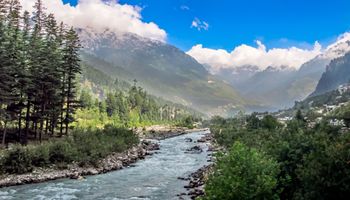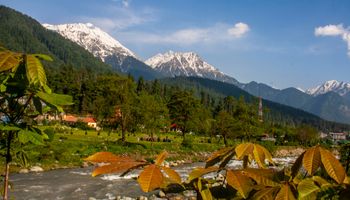


Kalpa, a small settlement perched high in Himachal Pradesh's Kinnaur district, sits face-to-face with the magnificent Kinnaur Kailash range. Snow-dusted peaks tower above terraced fields, and the Sutlej River cuts a silver thread through the valley far below. It's a landscape that makes you feel both humbled and electrified.
But the mountains aren't the only reason to make the journey here. Each year, the village erupts in celebration during the Raulane Festival — a vibrant, deeply spiritual event that few outsiders ever witness. This isn't a festival packaged for cameras or curated for social media. It's raw, communal, and steeped in centuries of Kinnauri tradition.
What follows is everything you need to know about this extraordinary celebration: its roots, its timing, and exactly what unfolds when the village comes together under the gaze of the sacred peak.
A Living Tradition Rooted in Devotion
Raulane is a traditional Kinnauri festival that honors the local deities who, according to regional belief, govern the well-being of the community and the fertility of the land. Unlike the large-scale Hindu festivals that sweep across India, Raulane belongs specifically to the people of Kinnaur — shaped by their unique blend of Hindu and Buddhist practices, woven together with animistic reverence for nature.
At its core, the festival is an act of gratitude. Villagers give thanks for successful harvests, pray for protection through the brutal winter months, and seek blessings from their presiding deity. The ceremonies carry a weight that's palpable — elders chant prayers passed down through oral tradition, and the entire community participates with a sincerity that stops you in your tracks.
What makes Raulane distinct from other Himalayan festivals is its deeply localized character. Every village in Kinnaur celebrates its own variation, with rituals and customs that differ from one settlement to the next. In Kalpa, the festival carries particular significance because of the village's proximity to Kinnaur Kailash, a peak considered sacred by both Hindus and Buddhists. The mountain's brooding presence lends every prayer, every procession, an almost cinematic gravity.
You won't find Raulane listed in mainstream travel itineraries. That's precisely what makes witnessing it so powerful — you're not an audience member watching a performance. You're a guest welcomed into a living tradition that has pulsed through these valleys for generations.
Marking the Calendar in the High Himalayas
Raulane typically takes place during the autumn months, after the apple harvest has been gathered and before winter seals the high passes with snow. The exact dates shift each year, determined by the traditional Kinnauri calendar and the guidance of local oracles and temple committees. If you're planning a trip, reaching out to locals or regional tourism contacts in advance is essential — this isn't a festival with a fixed date printed on a government brochure.
The setting is Kalpa itself, which sits at an elevation of roughly 2,960 meters in the Sutlej valley. Getting here requires commitment. From Shimla, the drive takes approximately eight to nine hours along winding mountain roads that snake through gorges, tunnels, and dense pine forests. The journey passes through Rampur and Reckong Peo before you finally climb the last switchbacks to Kalpa.
Once you arrive, the village's compact scale becomes part of the charm. Narrow lanes wind between traditional Kinnauri houses — stunning structures of stacked stone and timber with intricately carved wooden balconies. The main temple complex and the open gathering areas near it serve as the festival's epicenter. Apple trees line the slopes, their branches heavy with fruit in autumn, and behind everything rises Kinnaur Kailash, its granite face glowing amber at sunrise.
Autumn also happens to be one of the most visually spectacular times in Kinnaur. The air carries a bite of cold, the skies run impossibly blue, and the surrounding forests blaze with gold and crimson. Even without the festival, this season rewards every kilometer of that long mountain drive.
Drums, Deities, and the Spirit of Community
The festival announces itself through sound. Long before you see the procession, you hear the dholak drums and the sharp, bright notes of traditional Kinnauri instruments cutting through the mountain stillness. Musicians lead the way, their rhythms urgent and infectious, pulling the entire village into motion.
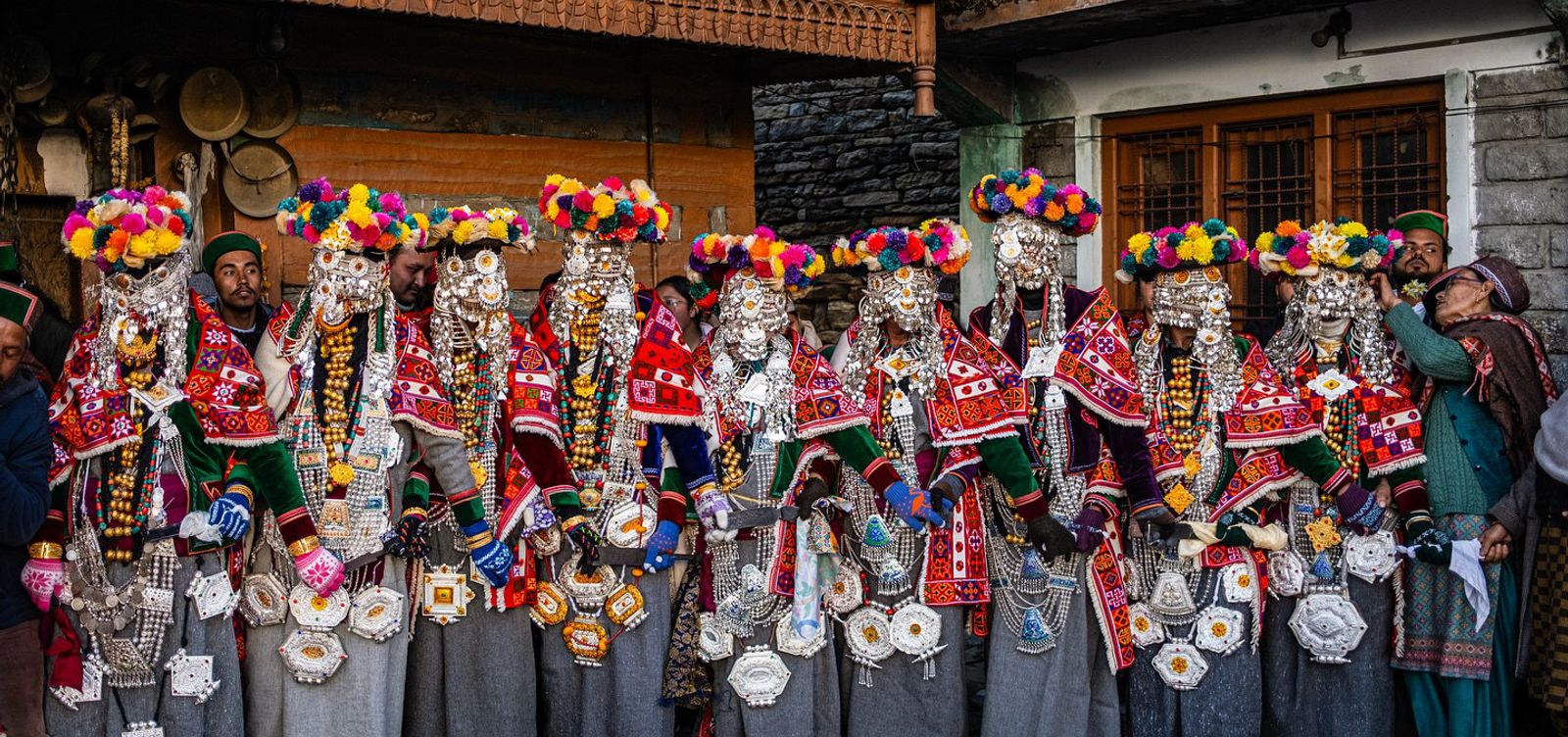
At the heart of the celebration, the local deity's idol — adorned with flowers, silk, and silver ornaments — emerges from the temple carried on a decorated palanquin. Villagers in traditional Kinnauri attire escort the procession through Kalpa's lanes. The women wear distinctive wool shawls and silver jewelry that catches the light, while the men don the iconic Kinnauri topi, the flat-topped green cap that's become a symbol of the region.
The energy shifts between the solemn and the ecstatic. Ritual offerings of flowers, incense, and grain happen with quiet intensity at the temple, while the open-air gatherings pulse with folk dance and song. Kinnauri nati — a slow, hypnotic circle dance — draws in participants of all ages, their feet moving in unison on packed earth while voices rise in harmony. You'll feel the pull to join, and chances are, someone will wave you in.
Food plays its own role in the celebration. Expect to taste siddu — steamed wheat bread stuffed with poppy seeds or walnuts — alongside plates of rajma cooked with local spices and freshly pressed apple cider. Villagers share meals generously, and refusing a plate is nearly impossible. The warmth of the food matches the warmth of the welcome.
What lingers most, though, isn't any single moment. It's the atmosphere — the collision of sacred ritual and joyful community, set against a backdrop so dramatic it barely feels real. Woodsmoke and juniper mingle in the evening air. Children dart between legs. Elders sit on stone walls, watching the festivities with knowing smiles. The mountain watches over all of it, silent and immense.
An Invitation Written in Mountains and Music
Some experiences don't translate through photographs or secondhand accounts. The Raulane Festival in Kalpa is one of them. It demands your presence — the chill on your skin, the drums in your chest, the taste of siddu still warm in your hands.
If you've been searching for a reason to venture deep into Kinnaur, let this be it. Plan ahead, travel with respect, and arrive with an open heart. Ask permission before photographing sacred rituals. Learn a few words of greeting. Sit with the locals when they invite you to eat.
Under the shadow of Kinnaur Kailash, in a village where ancient traditions still breathe, you'll find something that no luxury resort or bucket-list landmark can replicate — the feeling of being truly, profoundly somewhere.