A wrought-iron balcony draped in violet bougainvillea. A café table set with both a flaky croissant and a steaming cup of Tamil filter coffee. Street signs in French. Somewhere nearby, temple bells ring. Welcome to Puducherry — a place that shouldn't quite make sense, yet feels absolutely perfect.
This former French colonial territory on India's southeastern coast is unlike anywhere else in the country. Here, Tamil heritage and French influence have woven themselves into every street corner, every plate of food, every sun-faded doorway. And instead of the glorious chaos that pulses through most Indian cities, Puducherry moves at a gentler tempo — one that whispers, slow down, stay a while, pay attention.
Two Worlds, One Town
A single canal splits Puducherry into halves that feel like different continents. Cross to the east and you're in the French Quarter — known locally as White Town — where mustard-yellow colonial buildings stand in neat rows along shaded, grid-patterned streets. Bougainvillea tumbles over whitewashed compound walls. Wrought-iron balconies cast lacy shadows on the sidewalk below.
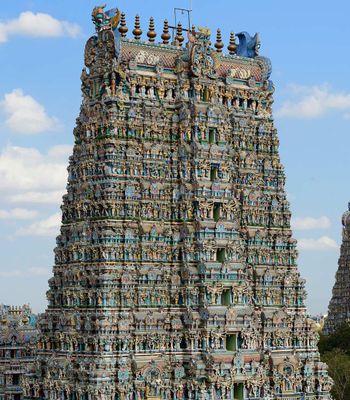
Step west across the canal and the air changes. The Tamil Quarter hits you with the familiar, thrilling rush of India — vendors hawking jasmine garlands, the clatter of stainless steel from busy eateries, temple gopurams rising above a sea of colorful storefronts. The distance between these two worlds? A five-minute walk. The contrast? Staggering.
Where the Sea Meets the Sidewalk
Puducherry's coastline doesn't look like your typical beach postcard — and that's part of its charm. The Promenade Beach runs along the French Quarter's eastern edge, a broad, paved walkway where waves crash against a rocky seawall below. There's no sand to speak of here, but that's not the point.
Show up at dawn and you'll find locals power-walking, couples sipping chai from paper cups, and the sky turning shades of mango and rose over the Bay of Bengal. The four-meter-tall statue of Mahatma Gandhi stands sentinel along the stretch, while the old lighthouse marks the horizon. By evening, the Promenade transforms into Puducherry's living room — half the town seems to gather here, faces lit by the last warm light of the day.
Stillness You Can Actually Feel
Few places in India shift your internal rhythm the way the Sri Aurobindo Ashram does. Founded in 1926, this spiritual center draws seekers from every corner of the globe. Within its walls, silence isn't just encouraged — it's palpable, almost physical. The noise of the street outside fades to nothing, replaced by the soft rustle of turning pages and the faint scent of incense.
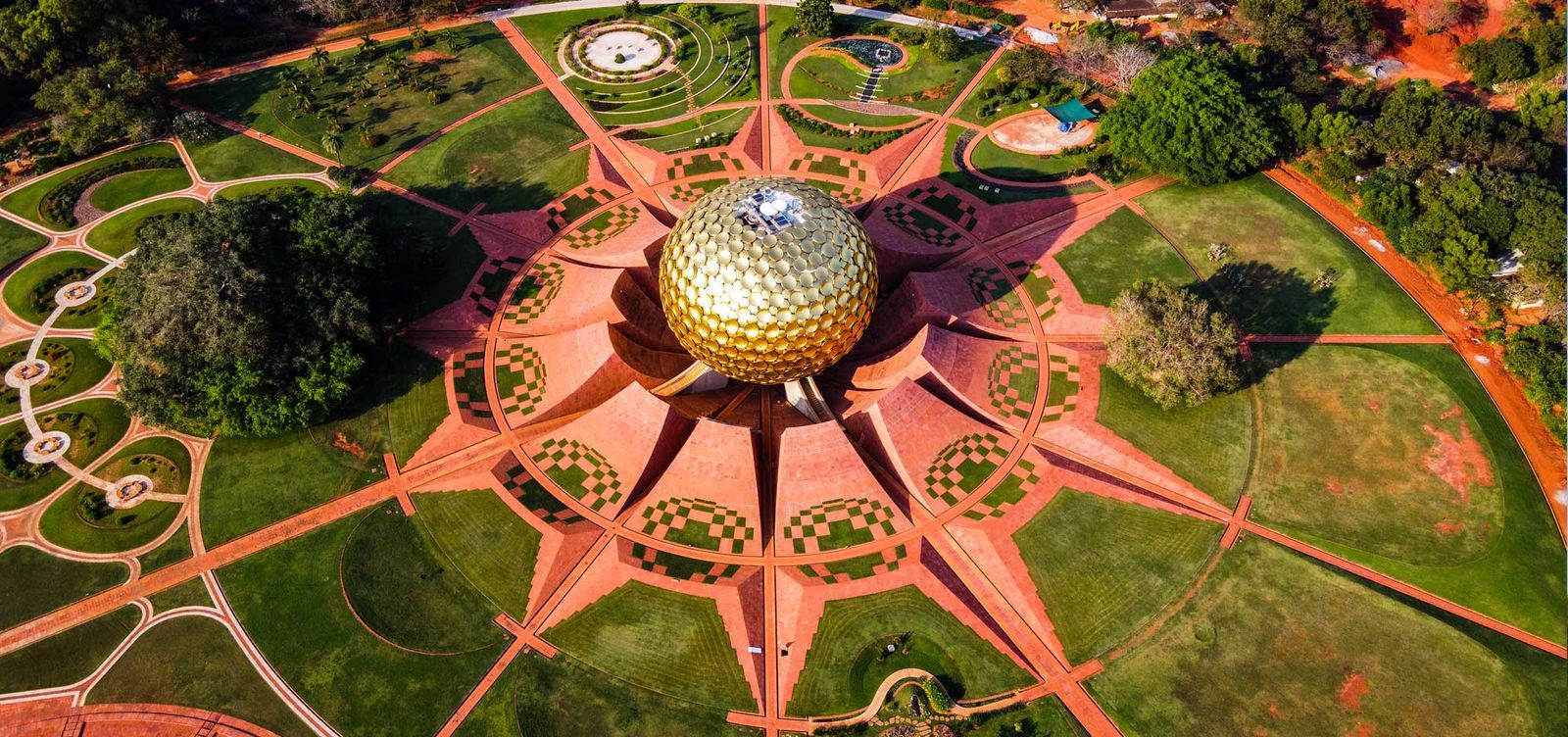
Drive twenty minutes north and you'll reach Auroville, an experimental township devoted to human unity. At its heart sits the Matrimandir — a massive, golden-skinned sphere that catches the light like something from another planet. You can view it from a distance or arrange a pass to enter and experience the chamber of silent concentration inside. Either way, the sight of it rising above the red earth and green canopy stays with you long after you leave.
Croissants for Breakfast, Dosa for Lunch
Decades of French presence left Puducherry with a culinary identity that's gloriously split-personality. Mornings might start at a corner boulangerie where the butter-rich aroma of fresh croissants drifts through the doorway. By lunchtime, you're tearing into a crispy paper dosa drizzled with coconut chutney, chasing it with a tumbler of dark, frothy filter coffee.
Restaurants along Mission Street and Rue Suffren serve this delicious duality — sometimes on the same plate. Sit at a sidewalk table in the French Quarter and you might find yourself choosing between coq au vin and chettinad chicken. Honestly? Order both.
Explore on Two Wheels
Rent a bicycle. Seriously — it's the best decision you'll make here. Puducherry is flat, compact, and calm enough that pedaling between attractions feels more like a pleasure ride than a commute. Lock up your bike and wander into any of these stops:
- Basilica of the Sacred Heart of Jesus — Gothic arches and stained glass that glow in the afternoon light
- Puducherry Museum — Colonial-era artifacts and rare bronzes tucked inside a quiet heritage building
- Bharathi Park — A green, leafy pause in the middle of the French Quarter
- Paradise Beach — Reached by a short boat ride from Chunnambar, with the kind of soft sand the Promenade doesn't have
- Serenity Beach — A laid-back stretch of coastline where a growing community of surf schools will have you standing on a board by sunset
Serenity Beach deserves special mention. The surf scene here is still young and wonderfully unpretentious — beginner-friendly waves, patient instructors, and none of the crowds you'd find on India's western coast. It suits Puducherry's unhurried temperament perfectly.
When to Go (and What to Expect)
October through March is your sweet spot. The tropical heat dials back, evenings along the Promenade feel breezy and mild, and the town hums with festivals and cultural events. April through June? Brace yourself — the heat is fierce. July to September brings the monsoon, which can turn streets into rivers but also paints the town in the most intense shades of green you've ever seen.
You'll hear Tamil, French, English, and Malayalam on these streets — a soundtrack that reflects the beautifully mixed community living here. Most locals in the hospitality world speak comfortable English, so navigating menus, rickshaw rides, and temple visits is refreshingly easy.
A Place That Defies Easy Labels
Not purely Indian, not remotely European. Not a spiritual retreat, not a beach town, not a food destination — and yet, somehow, all of these at once. Puducherry layers history, culture, coastline, and cuisine into an experience that very few places on India's map can match.
Come for the French Quarter's photogenic charm. Stay for the Tamil Quarter's electric energy. Linger for the sunsets, the coffee, the silence of the ashram, the salt spray on the Promenade. This is one of those rare destinations that doesn't just reward a visit — it quietly rearranges your idea of what an Indian town can be.