The first thing that hits you isn't the heat — it's the coffee. That deep, roasted, almost caramel-sweet aroma of freshly brewed filter coffee curling out of a tiny steel tumbler at a corner stall. One sip, and you understand: Chennai doesn't do anything halfway. As Tamil Nadu's sprawling capital, this city hugs the southeastern coastline where the Bay of Bengal crashes against a metropolis steeped in tradition, art, and a fierce, quiet pride. Auto-rickshaws roar through broad, sun-bleached avenues. Temple bells ring out over traffic. And somewhere, always, there's music.
Where the City Meets the Sea
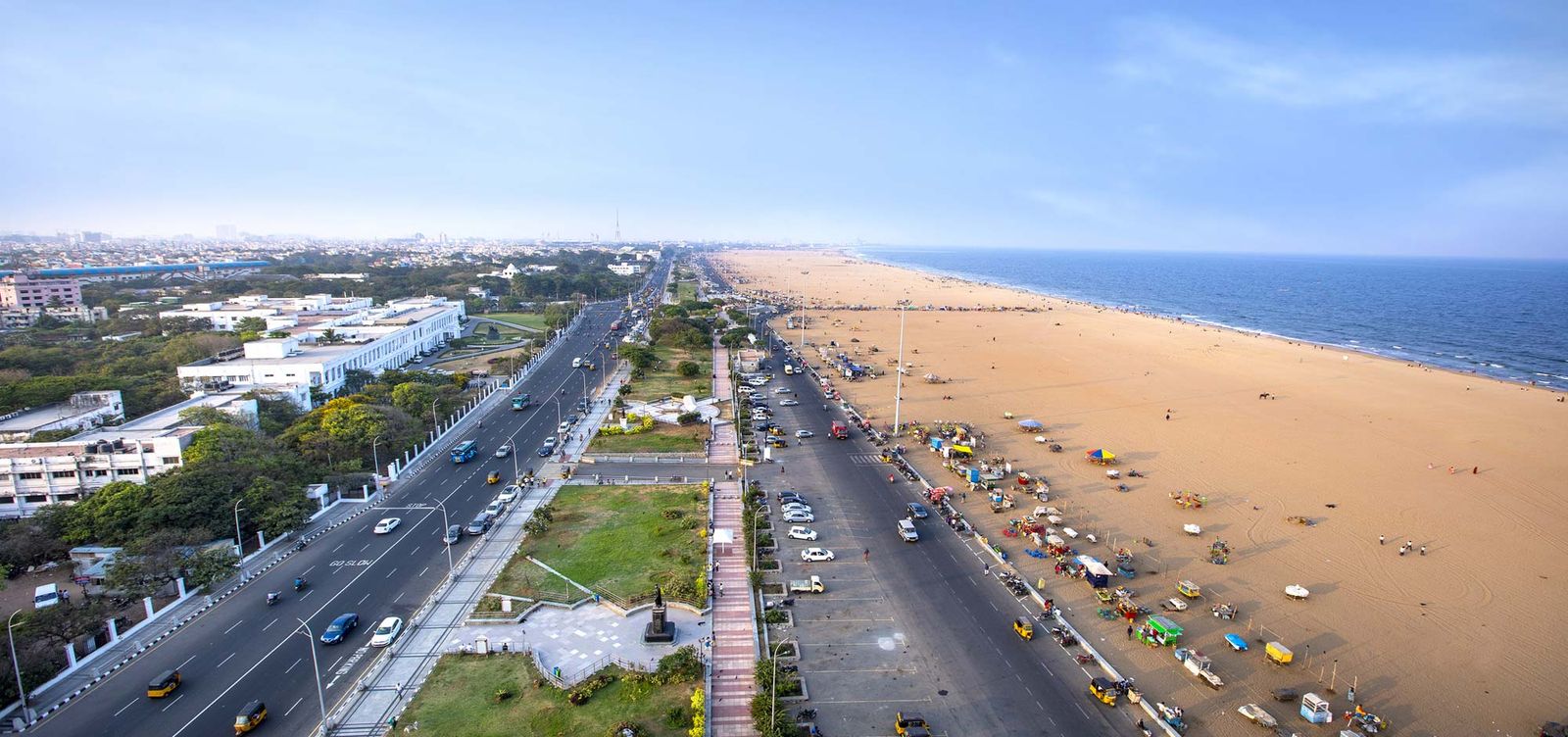
Marina Beach stretches so far it seems to dissolve into the horizon — one of the longest urban beaches on the planet, and Chennai's communal living room. At dawn, the sand belongs to joggers and fishermen hauling in their morning catch, nets glistening with silver.
By evening, the whole city seems to show up. Families fly kites that snap and dart against a tangerine sky. Vendors push carts loaded with roasted peanuts, their shells warm in your palm, and sundal — spiced chickpeas served in newspaper cones. The salt air sticks to your skin. Kids shriek as waves chase their ankles. This isn't a tourist beach; it's where Chennai breathes.
Monsoons, Rivers, and the Best Time to Go
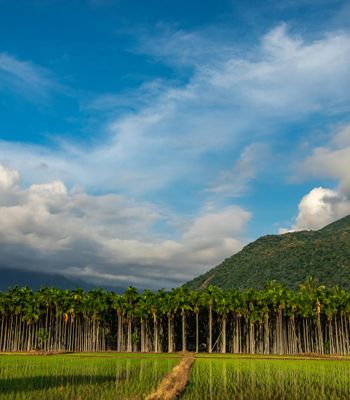
Beyond the shoreline, Chennai unfolds across a flat coastal plain, stitched together by the Adyar and Cooum rivers winding through its districts. The geography is gentle, almost understated — tree-lined neighborhoods giving way to sprawling temple compounds, sandy stretches melting into lush green corridors when the monsoon arrives.
And the monsoon does arrive, dramatically, between October and December. Rains swell the waterways and wash the city in an almost emerald glow. For the most comfortable visit, aim for November through February, when temperatures ease and the air feels generous. April through June? That's when Chennai earns its reputation — intense, humid heat that wraps around you like a wet blanket. You've been warned.
The Beating Heart of South Indian Culture
No city in India sounds quite like Chennai during the Margazhi season. Every December and January, classical Carnatic music pours out of concert halls, temple courtyards, and makeshift stages across the city — hundreds of performances over a few extraordinary weeks. Singers close their eyes and reach for notes that seem to bend time itself. Bharatanatyam dancers stamp intricate rhythms into the floor, their anklets shimmering.
Artists and aficionados fly in from around the world for this, but you don't need to be an expert to feel it. Sit in the audience of even one evening concert and something shifts — the music is ancient, mathematical, devotional, and utterly alive. It's a tradition spanning centuries, delivered with the intensity of something happening for the very first time.
Temples That Stop You in Your Tracks
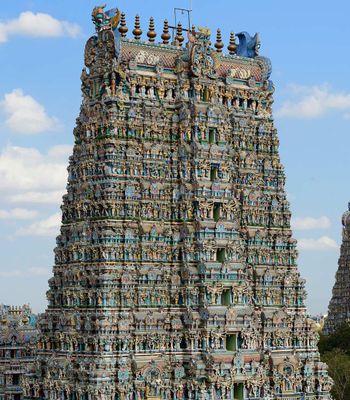
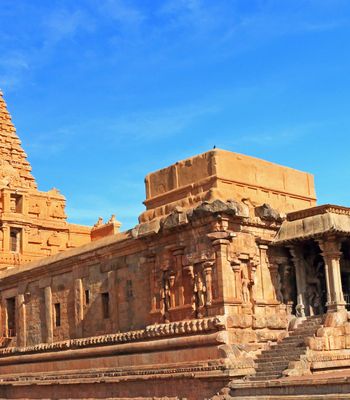
You'll see the Kapaleeshwarar Temple's gopuram tower before you see anything else in Mylapore. Rising in a blaze of painted figures — gods, goddesses, mythical creatures stacked in rows of vivid pink, turquoise, gold — it commands your gaze from blocks away. Up close, the carvings are staggeringly detailed, each figure caught mid-gesture, mid-story.
Step inside and the air changes: cooler, thick with the sweetness of jasmine garlands and camphor smoke. The Parthasarathy Temple, one of Chennai's oldest, dedicated to Lord Krishna, offers a quieter reverence — worn stone corridors where devotion has polished every surface smooth over centuries. Outside both temples, the sacred and the everyday collide beautifully: flower sellers thread garlands of orange marigolds, brass vendors polish tiny oil lamps, and silk shops unfurl fabric in impossible colors.
Neighborhoods That Tell a Thousand Stories
George Town hits you with sheer sensory overload. One of Chennai's oldest commercial quarters, it's a labyrinth of wholesale markets — spices piled in burlap sacks, bolts of fabric stacked floor to ceiling, colonial-era buildings with crumbling facades and wrought-iron balconies whispering of the city's days as a British trading post. Every lane seems to specialize in something different. Get lost on purpose.
Then escape to the tree-shaded lanes of Adyar and Besant Nagar, where the pace drops to a pleasant hum. Browse independent bookshops stuffed with Tamil literature and dog-eared paperbacks. Duck into a bakery for a warm, flaky egg puff. Let an afternoon drift by in a quiet park under the canopy of a rain tree.
A City You Eat Your Way Through
Sit down at any traditional restaurant, and a fresh banana leaf appears in front of you — your plate, your canvas. A crisp, golden dosa arrives with a satisfying crackle, alongside coconut chutney so fresh it's almost sweet and a sambar rich with tamarind and drumstick. This is breakfast, and it costs almost nothing, and it might be one of the best meals of your life.
Chennai's food scene runs impossibly deep. Humble tiffin shops serve pillowy idlis that dissolve on your tongue. Chettinad restaurants bring the fire — peppery, aromatic curries built on freshly ground spice blends that'll make you reach for your water glass and then immediately order more. Honestly? The food alone is worth the flight.
Green Escapes and a Day Trip You Shouldn't Skip
Morning light filters through the enormous canopy of the Theosophical Society's legendary banyan tree — a single tree so vast it looks like a small forest, its aerial roots dropping down like columns in a natural cathedral. Wander the surrounding gardens in the cool early hours, when parakeets chatter overhead and the city feels miles away.
Guindy National Park, remarkably, sits right within city limits — a pocket of wilderness where spotted deer graze and birders quietly log sightings. For a half-day adventure, drive an hour south to Mahabalipuram. UNESCO World Heritage rock-cut temples face the ocean here, carved from massive granite boulders over a thousand years ago. The sea breeze carries the faint sound of chisels from sculptors still practicing the craft along the main road.
The Kind of Warmth You Can't Fake
What pulls travelers back to Chennai isn't captured in any guidebook entry. It's the auto-rickshaw driver who insists on taking you to "the real best idli shop" on his street. It's the stranger at the temple who explains a carving's story with the pride of a museum curator. It's the way the whole city seems to say, without saying it: we're glad you came.
Deep-rooted culture, a coastline that glows at golden hour, food that rewires your understanding of flavor, and an unpretentious hospitality that feels genuinely rare — Chennai doesn't shout for your attention. It simply earns it, layer by unhurried layer, every single visit.