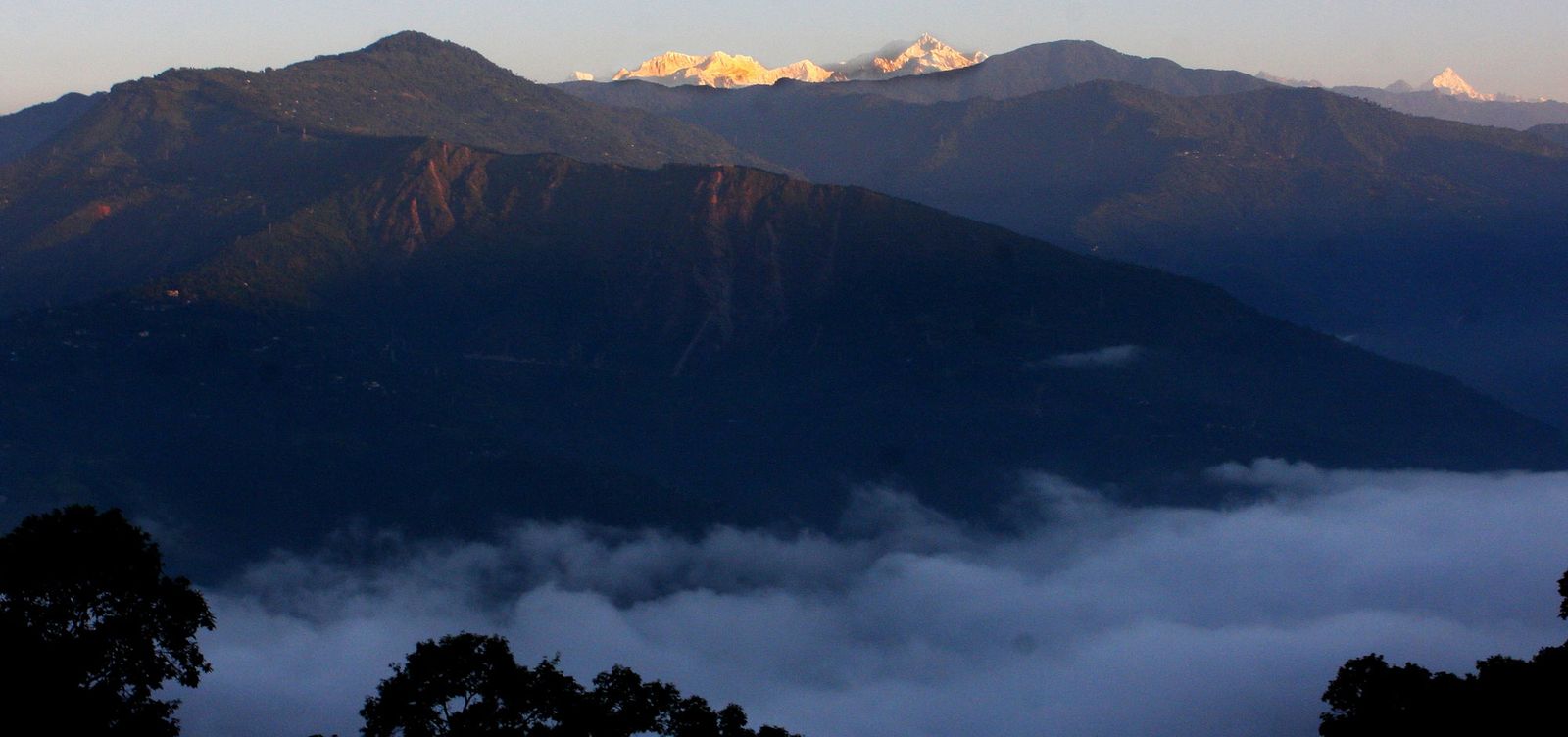
The first thing you notice is the silence. Not an empty silence — a breathing one, filled with birdsong, rustling pine, and the distant murmur of the Teesta River far below. Perched on a ridge at roughly 4,000 feet, Kalimpong unfolds like a secret the eastern Himalayas have been keeping from the rest of India. On a clear morning, the massive white wall of Kanchenjunga — the world's third-highest peak — fills the horizon so completely it hardly seems real. And unlike its more famous neighbor Darjeeling, this quiet West Bengal town never asks you to jostle for the view.
Where Prayer Flags Meet Church Steeples
Tibetan, Nepali, Bengali, Hindi — four languages might reach your ears before you've walked a single block through Kalimpong's town center. That layered soundtrack hints at a history as rich as the mountain soil here.
Once a crucial gateway for trade between India and Tibet, this town absorbed every culture that passed through it. Scottish missionaries built schools and churches during the Colonial Era, and their Gothic architecture still stands proudly beside Buddhist monasteries. Step inside St. Teresa's Church to admire its soaring pointed arches, then follow the road a few miles to Zang Dhok Palri Phodang monastery, where crimson-robed monks chant beneath fluttering prayer flags.
Few hill towns in India wear such spiritual diversity so effortlessly — and that collision of traditions is part of what makes every stroll here feel like a small discovery.
India's Secret Garden in the Clouds
A thousand shades of green cascade down Kalimpong's terraced slopes, but between April and May, those hillsides erupt into outrageous color. Orchids, gladioli, amaryllis, cacti — the town is renowned across India for its nurseries, and walking through them feels less like a garden tour and more like stepping into a botanical fever dream.
At Pinewood Nursery and Nurseryman's Haven, owners will guide you past row after meticulous row of rare specimens, pausing to cup a delicate orchid in their palm and share its story. The humid sweetness of soil and pollen clings to everything. For anyone who's ever lingered too long in a plant shop, Kalimpong isn't just a destination — it's a pilgrimage.
Hilltops That Steal Your Breath (in the Best Way)
Durpin Dara Hill delivers the kind of panorama that makes you stop mid-sentence. The valley drops away beneath you, terraced fields stitch the slopes in emerald patchwork, and snow-laden peaks line up along the northern sky like a jagged crown.
Drive a little further to Deolo Hill — the highest point in the area — and the world opens wider still. Open grasslands roll outward, a quiet park invites you to spread a blanket, and the only sounds are wind and the occasional hawk wheeling overhead. The road there winds through corridors of pine and bamboo so thick the sunlight filters through in golden shafts. Pack a thermos. You'll want to linger.
A Market That Feels Refreshingly Real
Forget curated souvenir shops. Every Wednesday and Saturday, the open-air Kalimpong Haat comes alive with the kind of energy that no boutique can replicate. Vendors spread woolens, handmade goods, and dried yak cheese across weathered wooden tables while the tang of fresh citrus and the earthy funk of fermented produce mingle in the mountain air.
Locals barter over bundles of leafy greens. Children dart between stalls. Someone hands you a sample of churpi — rock-hard Tibetan dried cheese that softens slowly on your tongue, smoky and deeply savory. This is Kalimpong at its most unfiltered, and it's magnificent.
For a quieter cultural stop, the Kalimpong Arts and Crafts Centre showcases locally made textiles, intricate woodwork, and traditional Tibetan items — each piece carrying the fingerprints of the artisan who shaped it.
Adventures With Altitude
Adrenaline seekers, take note. The winding roads connecting Kalimpong to nearby villages are a cyclist's playground — steep climbs rewarded with screaming descents and views that make you forget the burn in your legs. Trekking paths thread through the hills to hidden viewpoints, river crossings, and remote hamlets where homestays offer a cup of butter tea and a conversation that bridges worlds.
Down in the valley, the Teesta River runs fierce and fast during the post-monsoon months, drawing white-water rafters who crave Class III and IV rapids. Book ahead if river adventures call to you — seasonal availability shifts with the water level, and popular slots fill quickly.
When to Go (and How to Get There)
Spring (March–May) and autumn (October–November) are golden windows — mild temperatures, crystalline skies, and mountain views so sharp they look retouched. Summers stay blissfully comfortable while the plains below simmer. Monsoon season, June through September, drenches the landscape in lush green but can wash out roads and disrupt plans. Winter brings cool fog and quiet streets — perfect if solitude is what you're after.
Getting here is simpler than you'd expect. Fly into Bagdogra Airport near Siliguri (with connections from Kolkata, Delhi, and other major cities), then hop into a shared taxi or private car for a scenic two-to-three-hour drive through switchbacks that climb steadily into the clouds. Every hairpin turn reveals another postcard view, so claim the window seat.
The Kind of Place That Stays With You
Kalimpong doesn't shout. It doesn't need to. A monastery materializing through morning mist, a nursery owner cradling a rare orchid like an old friend, the sudden gasp of Kanchenjunga appearing as the clouds tear apart — these are the moments that settle into your memory and refuse to leave.
Without the congestion of larger hill stations, you set the rhythm here. Wander slowly. Breathe deeply. Whether you come chasing blossoms, mountain trails, or simply the clean bite of Himalayan air, Kalimpong has a way of following you home — long after you've descended back into the heat and noise of the plains below.