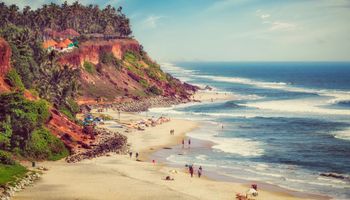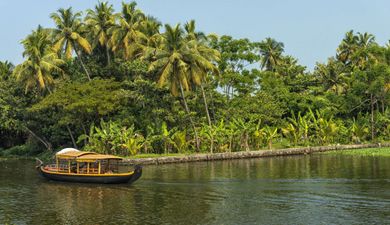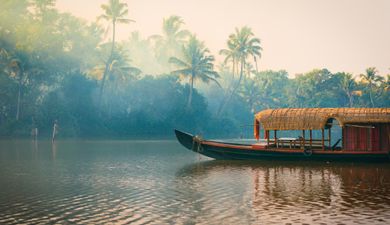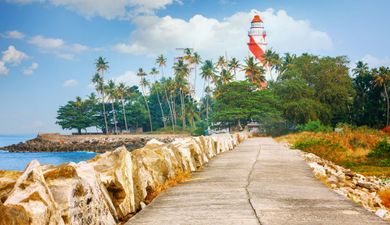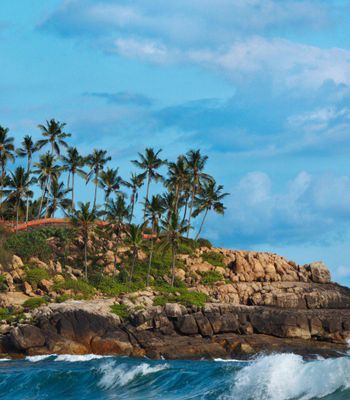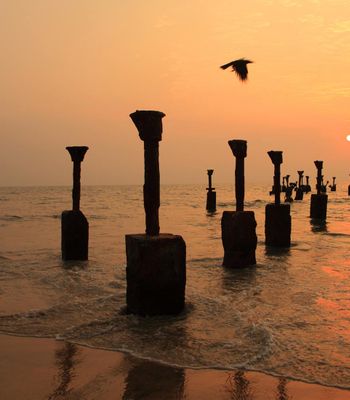
A slender ribbon of golden sand is all that separates a glassy river from the crashing Arabian Sea — and standing on it, you feel like you're balanced on the edge of two worlds. This is Poovar, a tiny coastal village at the southern tip of Kerala's Thiruvananthapuram district, where the Neyyar River exhales into the ocean in one of the most quietly breathtaking confluences you'll ever witness. Just thirty kilometers from the state capital, it feels like a secret that somehow slipped past the tourist trail.
Where the River Surrenders to the Sea
Poovar's estuary is the kind of place that makes you set your camera down and just stare. The Neyyar River fans wide here, its tea-dark waters pressing against a shifting bar of sand before finally dissolving into the salt and surf of the Arabian Sea. That sand barrier is never quite the same twice — tides sculpt it, monsoons reshape it, and every visit reveals a slightly different geography.
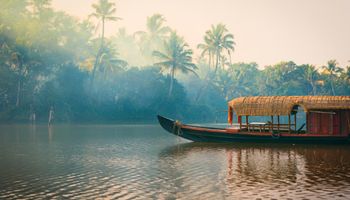
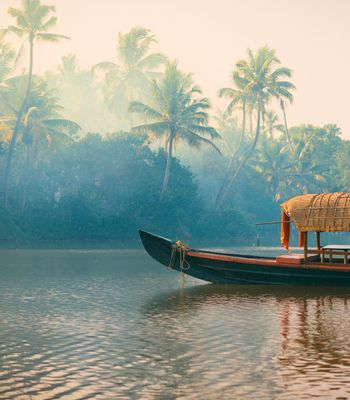
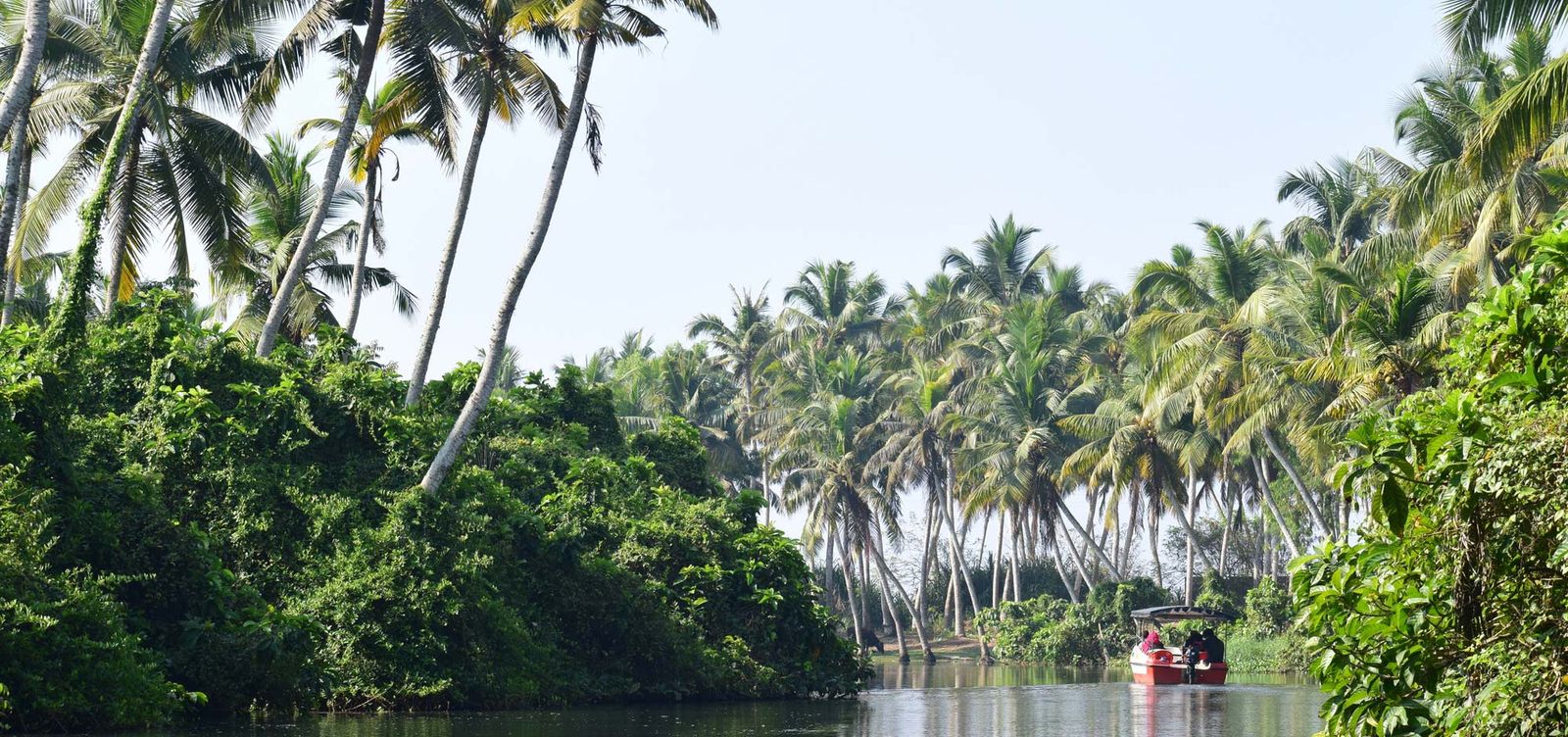
Drift along the river by boat and you'll see it up close: the thin, wind-rippled divide holding back white-capped waves on one side while coconut palms lean in from the banks on the other. Fresh water and salt water mingle in a way that gives Poovar an identity no other beach destination in Kerala can claim.
Getting There — Easier Than You'd Think
Thiruvananthapuram's international airport and well-connected railway station put Poovar within easy reach. Hop into a taxi or an auto-rickshaw and you'll be there in under an hour, watching the cityscape dissolve into palm groves and laterite lanes. Once you arrive, forget the roads — almost everything worth seeing here unfolds from the deck of a boat or beneath your bare feet on the sand.
Gliding Through a Living, Breathing Mangrove
The low thrum of an outboard motor fades. Your boatman cuts the engine, and suddenly the only sounds are dripping water and birdsong. Narrow waterways thread through dense mangrove forests where tangled roots plunge into dark, mirror-still water, and every few meters something moves — a flash of electric blue as a kingfisher dives, the slow unfurling of an egret's wings, a cormorant drying itself on a half-submerged branch.
Stay quiet and scan the muddy banks. Monitor lizards bask there with prehistoric patience, and overhead a fish eagle may trace lazy circles against a sky so blue it looks painted. For anyone who loves wildlife, this single boat ride justifies the entire journey to Poovar.
A Shoreline That Still Belongs to the Fishermen
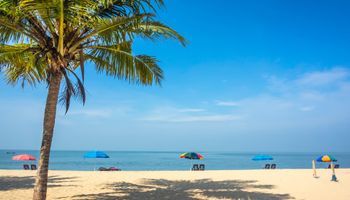
Forget the sun-lounger crowds of Kovalam or the cliff-top café scene at Varkala. Poovar's beach is a long, unhurried sweep of sand where footprints are scarce and the loudest thing you'll hear is the surf. Currents run strong near the river mouth, so swimming demands respect and caution — but an early morning walk here, when the light is soft gold and wooden fishing boats bob on the horizon, is the kind of stillness money can't buy.
By dawn, the sand is already alive with activity of a different kind. Fishermen haul dripping nets ashore, their catch flashing silver as they sort the morning's haul while gulls wheel and squabble overhead. It's a scene that has played out here for generations, and watching it unfold feels like a privilege.
Flavors That Linger Long After the Last Bite
When the boats come in, the kitchens fire up. Poovar's seafood arrives on your plate hours — sometimes minutes — after leaving the water, and the difference is something you taste immediately. Small eateries and resort restaurants cook it the way Kerala has always cooked it: bold, aromatic, unapologetically rich. Expect dishes built from:
- Freshly caught fish and prawns, still carrying the brine of the sea
- Coconut oil and freshly grated coconut, the backbone of every curry
- Curry leaves, popping mustard seeds, and dried red chilies that hit your nose before the plate reaches the table
- Tamarind and kokum lending a sharp, fruity tartness that cuts through the richness
Pair it all with fluffy rice or chunks of boiled tapioca, and you have the kind of meal that makes you close your eyes mid-bite and sigh.
Sleep on the Water, Wake to Birdsong
Some of Poovar's most memorable accommodations float. Thatched cottages perched on the backwaters rock gently with the current, and several properties are reachable only by boat — an arrival that instantly strips away whatever stress you carried in. Ayurvedic resorts take full advantage of the setting, offering oil-dripped massages and herbal therapies rooted in Kerala's centuries-old wellness traditions. Many travelers book a few nights and end up extending their stay, letting the rhythm of treatments and tides set their schedule.
When to Go — and Why the Rains Have Their Own Magic
October through March is the sweet spot: warm skies, gentle breezes, and barely a drop of rain. The monsoon months of June through September drench everything in sheets of warm rain that can make boat rides soggy — but the payoff is a landscape so intensely green it almost vibrates. March to May cranks up the heat and humidity, so pack light fabrics and plenty of patience if you visit in summer.
Beyond Poovar — But You Might Not Want to Leave
Should restlessness strike, day trips are plentiful. The forested hills around Neyyar Dam and Wildlife Sanctuary, the carved-wood splendor of ancient Padmanabhapuram Palace, and the lively shores of Kovalam all sit within easy driving distance. Most visitors, though, discover something unexpected once they settle into Poovar's pace: the desire to go nowhere at all.
The tide creeps in, the backwaters hum, and village life unfolds with an unhurried grace that makes ambition feel beside the point. Poovar doesn't shout for attention — it simply rewards every traveler willing to trade spectacle for serenity.