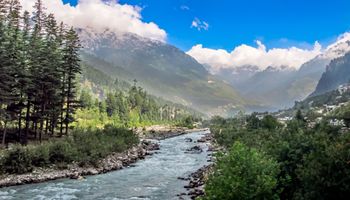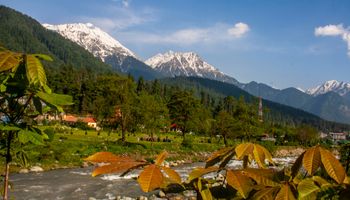
The road to Bharmour tests your commitment. It climbs off the Chamba valley and clings to a gorge above the Ravi, one lane of broken tarmac with the river roaring somewhere far below, and just when you've convinced yourself the driver is reckless, the valley widens and a small town appears on a shelf of mountain, dominated by a cluster of stone temples that have been standing there for well over a thousand years. This is Bharmour. It was the capital of Chamba long before Chamba existed.
Most people who make the long haul up here are on their way somewhere else — to the meadow of Kugti, or over the passes to Lahaul, or up the pilgrim trail to Manimahesh Lake. Bharmour is where they stop first. It rewards the ones who linger.
The Courtyard Where the Kings Prayed
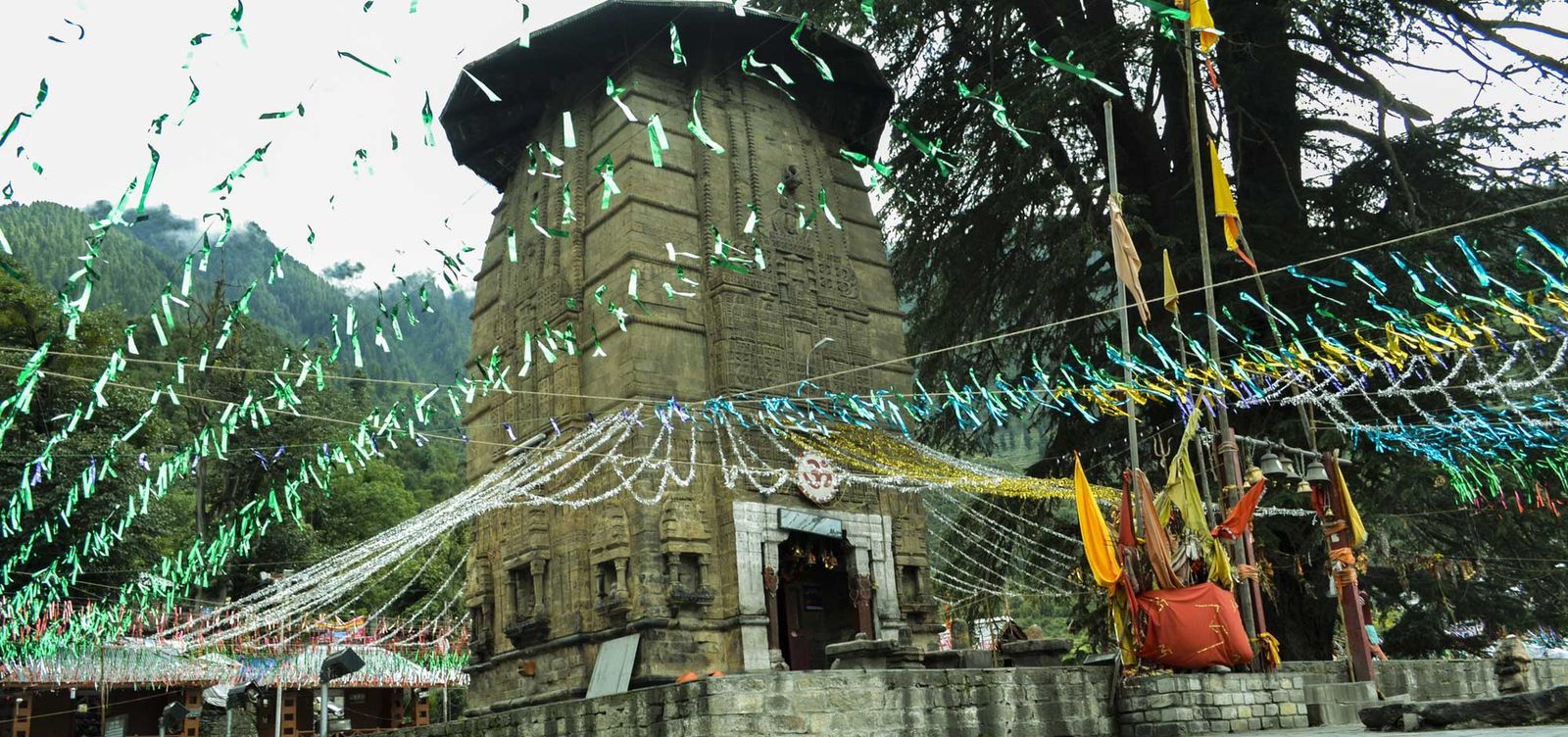
At the centre of the old town sits the Chaurasi, a stone-flagged courtyard holding a scatter of temples said to number eighty-four. Some are tall shikhara shrines in weathered grey stone, others little more than carved cubes, and children play cricket between them while old men sit on the plinths in the afternoon sun. It is not roped off or ticketed. It is simply the middle of the village, and has been for centuries.
The Manimahesh temple here is the one that matters, its spire rising above the rest, dedicated to Shiva. Nearby stands a brass image of a bull, worn smooth by generations of hands, and inside one of the older shrines a metal figure of the goddess Lakshana Devi has survived since the temple's founding, cast in the seventh century and still receiving offerings. You can walk right up to it. Ring the bell if you want. Nobody minds.
What strikes you is how ordinary the sacred feels here. No theatre to it, no crowd management, no priest steering you toward a donation box. A woman lays marigolds at a shrine on her way to buy vegetables. The holy and the everyday share the same courtyard, the way they have since the dynasty ruled from this ridge.
A Kingdom on a Mountain Shelf
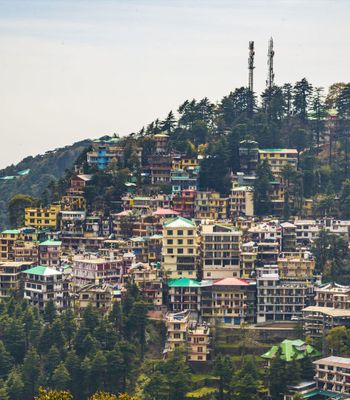
Bharmour was the seat of a Rajput line that governed these valleys for generations before shifting the capital down to Chamba. The town never grew much after that, and its smallness is precisely what preserved it. It doesn't sprawl. The stone houses stack up the slope, roofed in slate, smoke rising from kitchen fires, and the whole place can be walked end to end in twenty minutes.
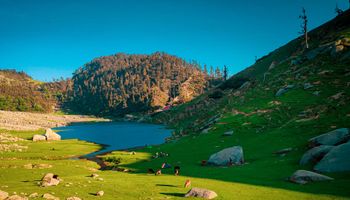
The people here are largely Gaddi — a pastoral community whose men still herd sheep and goats up to the high meadows each summer and bring them down before the snow. You'll see them on the paths in their traditional dress, a long white woollen coat cinched at the waist with a black rope wound many times around the body. Ask one where he's headed and the answer is often a pasture you've never heard of, three days' walk away.
Where the Mountains Take Over
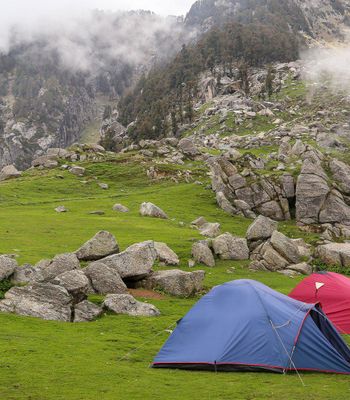
Bharmour sits at the edge of serious high country. Behind it the Dhauladhar and Pir Panjal ranges climb toward snow that lasts most of the year, and the town works as a launching point for walkers headed anywhere from a lazy afternoon in the deodars to the punishing haul up to Manimahesh.
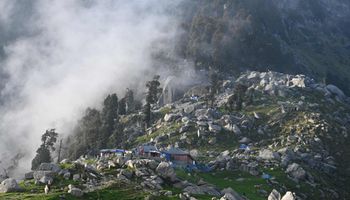
That pilgrim route begins from Hadsar, a short drive up-valley. It's a steep climb of around thirteen kilometres to a glacial lake sitting beneath the pyramid peak of Manimahesh Kailash, which devotees hold to be an abode of Shiva. During the annual pilgrimage in late summer, thousands climb it, many barefoot, and the trail becomes a slow river of the faithful. Come outside that window and you'll often have long stretches of it to yourself, the only sound your own breathing and the wind off the ice.
For something gentler, take the path up to Bharmani Devi, a couple of hours' climb above town through forests of deodar and pine where the resin hangs sharp in the cool air. This is where pilgrims traditionally go to bathe before attempting Manimahesh. The view from up there — the Chaurasi temples reduced to grey specks below, the ranges piling up behind — is the kind of thing you sit with for a while.
Where the Shops Shut at Dusk
Life in Bharmour runs slow and early. The market is a single short street of shops selling woollens, dried apricots, rope, and the odd packet of biscuits, and by nightfall most of it has shuttered. No nightlife to speak of. That's not a complaint.
Eat where the locals eat, in one of the small dhabas near the bus stand, and you'll get a plate of rajma-chawal — red kidney beans stewed slow over a wood fire, ladled over rice — that tastes better at this altitude than it has any right to. In season, apples and apricots come straight off the surrounding orchards. The tea is strong, milky, and cheap, and you'll drink a lot of it, partly for warmth and partly because there's little else to do but sit and watch the valley.
The nights are cold even in summer, and the electricity has a habit of failing. Bring a torch and a warm layer. The reward for the dark is a sky thick with stars, the Milky Way smeared clear across it, and the black bulk of the mountains cut sharp against it.
The Reward for the Bad Road
Bharmour is not comfortable, and it doesn't pretend to be. The road up is nerve-wracking, the accommodation is basic, and if you want luxury you should go somewhere else entirely.
What it offers instead is a town that hasn't been arranged for anyone. Thousand-year-old temples with cricket matches played between them. A courtyard where the sacred and the mundane have shared space so long that the distinction has blurred. That's rarer than any comfort a smoother hill station can sell you.
Come between May and October, when the passes are open and the meadows green. Give it two or three days — enough for the Chaurasi, a walk into the hills, and an afternoon that does nothing but pass. Bharmour was the capital of a mountain kingdom that the world mostly forgot. Climb up and see what got left behind.